Free shipping for orders over $200
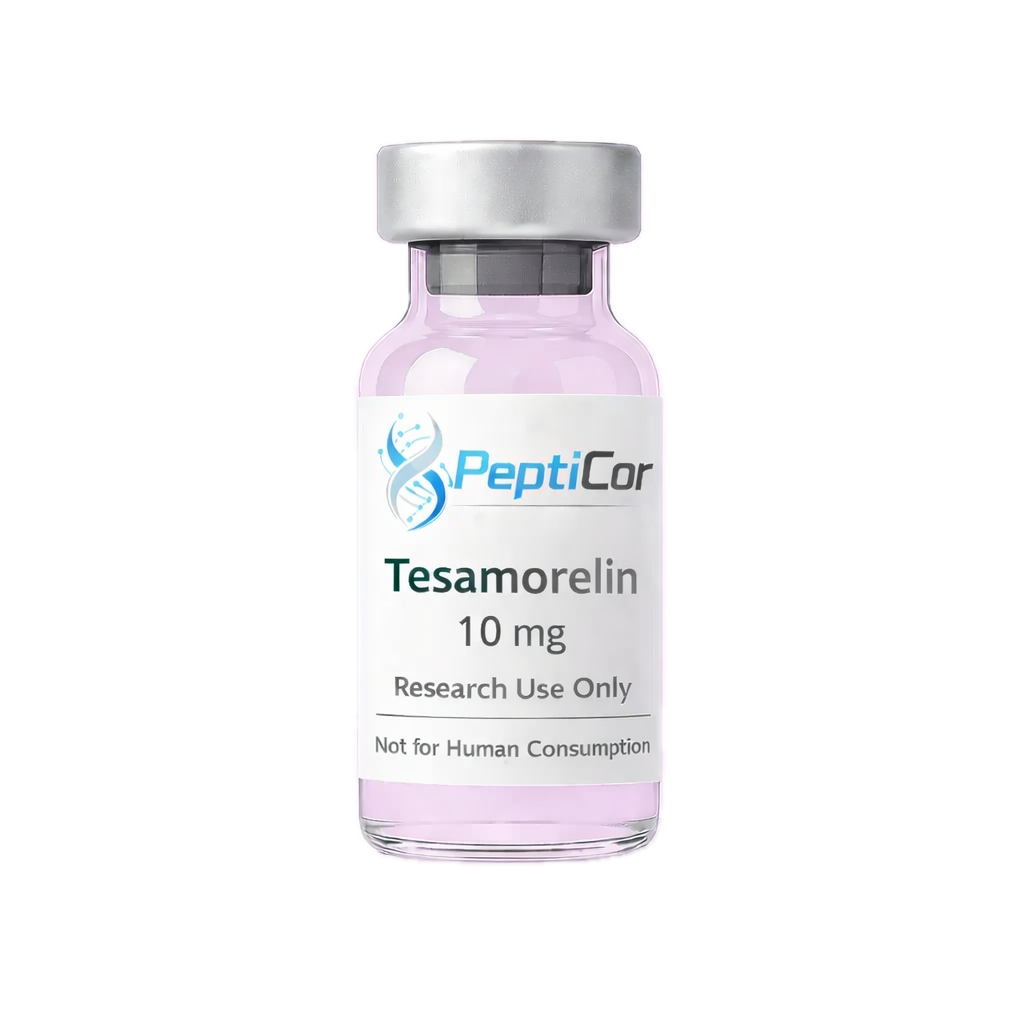
Tesamorelin
SKU P-TESAM-1
$95.00
In stock
1
Product Details
Shipping: Please allow 7-14 days for delivery.
Tesamorelin is a synthetic analog of human growth hormone-releasing hormone (GHRH) consisting of 44 amino acids that has been extensively studied for its ability to stimulate endogenous growth hormone secretion and reduce excess visceral adipose tissue.(1) This modified GHRH analog includes the full 44-amino acid sequence of native GHRH with a trans-3-hexenoic acid group attached to the N-terminus, which enhances stability and biological activity while maintaining physiological growth hormone release patterns. Tesamorelin is distinguished as the first and only FDA-approved medication specifically indicated for the reduction of excess abdominal fat in HIV-infected patients with lipodystrophy, though its mechanisms and effects have broader research applications in metabolic health and body composition studies.
Tesamorelin is a synthetic peptide, produced via solid-phase peptide synthesis for research and approved clinical applications. Researchers consider Tesamorelin to be a potent and selective growth hormone-releasing hormone receptor (GHRHR) agonist with a unique profile of metabolic and body composition effects that extend beyond simple growth hormone elevation.(2) The peptide is posited to function through specific binding to GHRHR on pituitary somatotrophs, initiating a signaling cascade that results in pulsatile growth hormone secretion that maintains physiological feedback regulation. Unlike exogenous growth hormone administration which suppresses endogenous production, Tesamorelin preserves the natural pulsatile pattern of growth hormone release and maintains normal regulatory mechanisms.
The mechanism by which Tesamorelin may potentially reduce visceral adipose tissue and influence metabolic parameters appears to involve complex interactions between growth hormone, insulin-like growth factor-1 (IGF-1), and adipose tissue metabolism. The peptide is considered to stimulate growth hormone secretion through GHRHR activation, leading to downstream IGF-1 production in the liver and peripheral tissues. Growth hormone exerts potent lipolytic effects on adipose tissue, particularly visceral fat, through activation of hormone-sensitive lipase and inhibition of lipoprotein lipase. Additionally, Tesamorelin's effects may involve modulation of insulin sensitivity, glucose metabolism, lipid profiles, and inflammatory markers associated with visceral adiposity. This action may result in significant reductions in visceral adipose tissue, improvements in body composition, favorable changes in metabolic parameters, and potential benefits for cardiovascular risk factors in various research and clinical contexts.
Tesamorelin's biological activities are considered to extend across numerous physiological systems through its primary mechanism of stimulating endogenous growth hormone secretion, suggesting important roles in metabolic regulation, body composition control, and age-related physiological changes. The mechanism by which Tesamorelin may potentially influence these diverse processes appears to involve both direct growth hormone-mediated effects on target tissues and indirect effects through IGF-1 signaling, metabolic alterations, and changes in adipokine production from reduced visceral adiposity. These alterations in hormonal status, body composition, and metabolic function may impact various physiological parameters, which are considered to be critical factors in numerous biological processes related to metabolic health, cardiovascular function, cognitive performance, and age-related tissue changes.
Chemical Makeup
Molecular Formula: C221H366N72O67S
Molecular Weight: 5135.77 g/mol
Sequence: 44-amino acid GHRH analog with trans-3-hexenoic acid modification
Other Known Titles: TH9507, Egrifta (brand name), GHRH(1-44)NH2 with hexenoyl modification
Research and Clinical Studies
Tesamorelin and Visceral Adipose Tissue Reduction
Research has been undertaken to evaluate the potential actions of Tesamorelin on visceral adipose tissue (VAT) accumulation and abdominal fat distribution in various clinical populations. One study aimed to assess the peptide's ability to specifically reduce visceral fat while preserving or enhancing lean body mass, focusing on its mechanisms of selectively targeting intra-abdominal adiposity.(3) More specifically, researchers posited that Tesamorelin may provide significant reductions in visceral adipose tissue through growth hormone-mediated lipolytic effects, with particular efficacy for excess visceral fat accumulation.
The study suggests that Tesamorelin may reduce visceral adiposity in research models and clinical populations through potent stimulation of endogenous growth hormone secretion. It is posited that Tesamorelin may bind to GHRHR on pituitary somatotrophs, potentially initiating signaling cascades that result in pulsatile growth hormone release. The elevated growth hormone may then exert preferential lipolytic effects on visceral adipocytes, which appear more sensitive to growth hormone's fat-mobilizing actions than subcutaneous adipocytes. These activities suggest that the peptide might facilitate significant reductions in visceral fat depots. The mechanism appears to involve growth hormone-mediated activation of hormone-sensitive lipase in visceral adipocytes and inhibition of lipoprotein lipase, shifting the balance toward fat mobilization.
Moreover, it is mentioned that Tesamorelin has been studied extensively in HIV-infected patients with lipodystrophy, a condition characterized by abnormal fat distribution including excess visceral adiposity, and has demonstrated consistent efficacy in reducing VAT in this population. The peptide's ability to reduce visceral fat while maintaining or increasing lean tissue is considered particularly relevant for metabolic health, as visceral adiposity is strongly associated with metabolic dysfunction, insulin resistance, and cardiovascular risk. Tesamorelin may produce reductions in visceral adipose tissue area measured by CT or MRI imaging of 15-20% or more in clinical studies. Studies suggest that further research is needed to fully understand the peptide's effects on visceral fat across different populations and its long-term metabolic consequences.
Tesamorelin and Growth Hormone Dynamics
Studies have explored various mechanisms via which Tesamorelin influences endogenous growth hormone secretion patterns and IGF-1 production.(4) One proposed mechanism suggests that Tesamorelin stimulates physiological growth hormone release through selective GHRHR activation, maintaining normal pulsatile secretion patterns and feedback regulation. The improvements in growth hormone status observed in research models in the presence of Tesamorelin may be mediated by enhanced secretory pulse amplitude, maintained pulse frequency, appropriate feedback regulation through IGF-1, and preservation of the hypothalamic-pituitary-IGF-1 axis integrity.
The peptide's effects on growth hormone dynamics appear to involve selective receptor activation that maintains physiological regulatory mechanisms. Tesamorelin may enhance growth hormone pulse amplitude without disrupting the natural pulsatile pattern that is important for optimal physiological effects. Studies have investigated the peptide's ability to increase serum IGF-1 levels as a downstream consequence of enhanced growth hormone secretion. The elevated IGF-1 production might contribute to anabolic and metabolic effects observed with Tesamorelin treatment in research models.
Additionally, the peptide's preservation of normal growth hormone regulatory mechanisms may be particularly relevant compared to exogenous growth hormone administration, which suppresses endogenous production and disrupts normal pulsatility. By stimulating rather than replacing growth hormone, Tesamorelin might maintain appropriate feedback regulation and minimize risks of excessive hormone exposure. Furthermore, the possibility that Tesamorelin's effects on growth hormone secretion may vary with factors such as age, nutritional status, and metabolic health has been investigated. The modulation of these pathways might influence the magnitude and pattern of growth hormone responses in research models. Studies have also examined whether Tesamorelin might help restore growth hormone secretion in populations with age-related declines or pathological suppression of the growth hormone axis.
Tesamorelin and Body Composition
Research has investigated the potential effects of Tesamorelin on overall body composition parameters including lean body mass, fat mass, and body mass distribution in various experimental and clinical models. Studies posit that Tesamorelin might influence body composition through mechanisms related to growth hormone's anabolic effects on lean tissue combined with lipolytic effects on adipose tissue.(5) Preliminary data tentatively suggests that Tesamorelin might potentially increase lean body mass while simultaneously reducing fat mass, particularly visceral adiposity.
In elaborating on these pathways, growth hormone exerts both anabolic effects on protein metabolism and catabolic effects on lipid metabolism. Tesamorelin's stimulation of endogenous growth hormone may influence body composition through multiple mechanisms. The peptide may enhance protein synthesis and nitrogen retention, potentially supporting lean tissue maintenance or accretion. Studies have suggested that Tesamorelin might produce favorable changes in lean-to-fat mass ratios, with particular effects on reducing trunk and abdominal fat while preserving or increasing appendicular lean tissue in research models.
The mechanism by which Tesamorelin may affect body composition appears to involve both direct growth hormone effects on target tissues and indirect effects through IGF-1 signaling and metabolic adaptations. Research has indicated that growth hormone influences nutrient partitioning, directing nutrients toward lean tissue synthesis while promoting fat mobilization. The peptide may affect body composition differently depending on baseline characteristics, with potentially greater effects in populations with excess visceral adiposity or growth hormone deficiency. Some studies have investigated whether Tesamorelin might have implications for sarcopenic obesity (simultaneous muscle loss and fat gain) or might affect regional body composition in specific ways. These observations suggest that Tesamorelin may possibly optimize body composition across multiple compartments, although the magnitude of effects varies across populations and continues to be investigated.
Tesamorelin and Metabolic Health
The peptide Tesamorelin may have significant roles in metabolic regulation and glucose homeostasis, based on investigations into its effects on insulin sensitivity, glucose metabolism, and metabolic markers. It is thought that Tesamorelin might influence metabolic parameters through multiple mechanisms, including reduction of metabolically harmful visceral adiposity, modulation of adipokine production, effects on insulin signaling, and growth hormone-mediated metabolic effects.(6) These processes are considered to potentially involve improvements in insulin sensitivity associated with visceral fat reduction, modulation of inflammatory markers linked to metabolic dysfunction, and optimization of glucose and lipid metabolism.
Research has suggested that Tesamorelin might particularly improve metabolic health markers in populations with visceral adiposity and associated metabolic dysfunction. Studies have indicated that Tesamorelin may reduce markers of insulin resistance in some contexts, potentially through reduction of visceral adipose tissue which contributes to metabolic dysfunction. The peptide may influence adipokine profiles, potentially reducing pro-inflammatory adipokines and increasing beneficial adipokines. Researchers consider these observations as potential indicators of Tesamorelin's role in metabolic health optimization.
It is posited that by reducing visceral adiposity while maintaining lean tissue, Tesamorelin might improve overall metabolic efficiency and insulin sensitivity. This may involve reduction of ectopic fat deposition in liver and muscle, enhancement of glucose uptake in peripheral tissues, and proper regulation of hepatic glucose production. The peptide's potential effects on improving metabolic parameters may be particularly important for research examining metabolic syndrome, type 2 diabetes risk, and metabolic complications of obesity. Some research has investigated whether Tesamorelin might affect fasting glucose, glucose tolerance, HbA1c, or other glycemic markers, with results varying across studies and populations. Given the prevalence of metabolic dysfunction and its health consequences, Tesamorelin's potential metabolic effects are of significant research interest. These potential effects on metabolic health are still under investigation and show complex relationships with baseline metabolic status and treatment duration.
Tesamorelin and Lipid Metabolism
Studies have explored the potential effects of Tesamorelin on lipid profiles and cholesterol metabolism. Research suggests that Tesamorelin may influence lipid parameters through effects on visceral adipose tissue reduction, growth hormone-mediated effects on lipid metabolism, and changes in hepatic lipid processing.(7) One proposed mechanism involves the reduction of visceral adiposity leading to improvements in dyslipidemia patterns commonly associated with excess abdominal fat.
Investigations have indicated that Tesamorelin might potentially affect various lipid parameters including triglycerides, total cholesterol, LDL cholesterol, and HDL cholesterol. The peptide's effects appear to involve modulation of factors that regulate lipid metabolism, including potential effects on hepatic lipid synthesis and clearance. Tesamorelin may influence triglyceride levels, with some studies showing reductions in this cardiovascular risk marker. The peptide may also affect cholesterol metabolism, though effects on different cholesterol fractions may vary. Some research has suggested potential increases in HDL cholesterol in certain populations.
The mechanism by which Tesamorelin may affect lipid profiles appears to involve both direct growth hormone effects on lipid metabolism and indirect effects through reduction of metabolically active visceral adipose tissue. Research has indicated that visceral adiposity is associated with dyslipidemia including elevated triglycerides and reduced HDL cholesterol. The peptide's reduction of visceral fat may therefore contribute to improvements in lipid profiles. Some studies have investigated whether Tesamorelin might affect apolipoprotein levels, lipoprotein particle size distribution, or other advanced lipid markers. These potential effects on lipid metabolism continue to be investigated, with researchers examining how changes in body composition translate to cardiovascular risk marker modifications.
Tesamorelin and Cardiovascular Risk Markers
Research has investigated the potential effects of Tesamorelin on cardiovascular disease risk markers beyond traditional lipid parameters. Studies posit that Tesamorelin might influence cardiovascular risk through mechanisms related to visceral adiposity reduction, improvements in metabolic parameters, effects on inflammatory markers, and potential direct cardiovascular effects of growth hormone.(8) Preliminary data tentatively suggests that Tesamorelin might potentially improve various cardiovascular risk markers associated with visceral obesity and metabolic syndrome.
In elaborating on these pathways, visceral adipose tissue is recognized as an independent risk factor for cardiovascular disease, producing inflammatory cytokines and contributing to metabolic dysfunction. Tesamorelin's reduction of visceral adiposity may therefore have implications for cardiovascular risk. The peptide may reduce inflammatory markers such as C-reactive protein (CRP) that are associated with cardiovascular risk. Studies have suggested that Tesamorelin might affect markers of endothelial function or vascular health in some research contexts.
The mechanism by which Tesamorelin may affect cardiovascular risk appears to involve primarily its effects on visceral adiposity and associated metabolic improvements, though direct cardiovascular effects of growth hormone may also play a role. Research has indicated that reduction of visceral fat is associated with improvements in multiple cardiovascular risk factors. The peptide may influence blood pressure, though effects have been variable across studies. Some research has investigated whether Tesamorelin might affect carotid intima-media thickness, arterial stiffness, or other markers of subclinical cardiovascular disease. These observations suggest that Tesamorelin may possibly influence cardiovascular risk profiles, although the long-term cardiovascular outcomes associated with Tesamorelin treatment continue to be areas requiring further investigation.
Tesamorelin and Hepatic Fat
Studies have explored the potential effects of Tesamorelin on hepatic steatosis (fatty liver) and liver health markers. Research suggests that Tesamorelin may influence liver fat content through growth hormone-mediated effects on hepatic lipid metabolism and through reduction of visceral adiposity that contributes to fatty liver development.(9) One proposed mechanism involves growth hormone's effects on hepatic lipid oxidation and export, potentially reducing liver fat accumulation.
Investigations have indicated that Tesamorelin might potentially reduce hepatic fat content in populations with non-alcoholic fatty liver disease (NAFLD) or steatosis associated with metabolic dysfunction. The peptide's effects appear to involve modulation of hepatic lipid metabolism, including potential effects on lipid synthesis, oxidation, and export as very-low-density lipoproteins. Tesamorelin may influence liver enzyme levels in some contexts, potentially reflecting changes in hepatic metabolism or liver health. The peptide may also affect hepatic insulin sensitivity, which is often impaired in fatty liver disease.
The mechanism by which Tesamorelin may affect liver fat appears to involve both direct growth hormone effects on hepatocytes and indirect effects through reduction of visceral adiposity and associated metabolic improvements. Research has indicated that visceral adiposity and insulin resistance are major drivers of hepatic steatosis. The peptide's effects on these factors may contribute to liver fat reduction. Some studies have investigated whether Tesamorelin might affect the progression of NAFLD to more severe liver disease or might improve liver fibrosis markers. These potential hepatic effects continue to be investigated, with researchers examining the mechanisms and clinical significance of liver-related changes with Tesamorelin treatment.
Tesamorelin and Cognitive Function
Research has investigated the potential effects of Tesamorelin on cognitive performance and brain health, particularly in populations with HIV-associated cognitive impairment. Studies posit that Tesamorelin might influence cognitive function through mechanisms related to growth hormone and IGF-1 effects on brain tissue, reduction of metabolic and inflammatory factors that impair cognition, and potential direct neurotrophic effects.(10) Preliminary data tentatively suggests that Tesamorelin might potentially improve certain cognitive domains in specific populations.
In elaborating on these pathways, growth hormone and IGF-1 have been implicated in cognitive function, neuroplasticity, and brain health across the lifespan. Tesamorelin's stimulation of the growth hormone/IGF-1 axis may influence cognitive processes. The peptide may affect cognitive domains including executive function, verbal memory, and processing speed in research models. Studies have suggested that Tesamorelin might have particular cognitive benefits in HIV-infected individuals who often experience cognitive difficulties related to viral effects, inflammation, and metabolic factors.
The mechanism by which Tesamorelin may affect cognitive function appears to involve multiple pathways including direct neurotrophic effects of IGF-1 on brain tissue, improvements in cerebral blood flow, reduction of systemic inflammation that affects brain health, and metabolic improvements that support brain function. Research has indicated that metabolic dysfunction and inflammation can impair cognitive performance. The peptide's effects on these factors may contribute to cognitive benefits. Some studies have investigated whether Tesamorelin might affect brain structure, functional connectivity, or specific neural processes underlying cognitive performance. These observations suggest that Tesamorelin may possibly have cognitive effects in certain populations, although the mechanisms and generalizability across different groups continue to be areas of active investigation.
Tesamorelin and Inflammatory Markers
Studies have explored the potential anti-inflammatory effects of Tesamorelin, particularly in the context of reducing visceral adiposity-associated inflammation. Research suggests that Tesamorelin may influence inflammatory markers through reduction of visceral adipose tissue, which is a significant source of pro-inflammatory cytokines, and through potential direct anti-inflammatory effects of growth hormone.(11) One proposed mechanism involves the reduction of adipose tissue inflammation and inflammatory cytokine production associated with decreased visceral fat mass.
Investigations have indicated that Tesamorelin might potentially reduce various inflammatory markers including C-reactive protein (CRP), interleukin-6 (IL-6), and tumor necrosis factor-alpha (TNF-α) in some research contexts. The peptide's effects appear to involve modulation of inflammatory processes associated with visceral adiposity and metabolic dysfunction. Tesamorelin may reduce the infiltration of inflammatory immune cells into adipose tissue or may affect the inflammatory phenotype of adipocytes and adipose tissue macrophages. The peptide may also influence systemic inflammatory status through multiple mechanisms.
The mechanism by which Tesamorelin may affect inflammatory markers appears to involve primarily the reduction of inflammatory visceral adipose tissue, though direct effects of growth hormone on immune cells and inflammatory processes may also contribute. Research has indicated that visceral adiposity is strongly associated with chronic low-grade inflammation that contributes to metabolic disease and other health problems. Some studies have investigated whether Tesamorelin might affect specific inflammatory pathways or might have implications for inflammation-related complications in various populations. These potential anti-inflammatory effects continue to be investigated, with researchers examining the relationships between visceral fat reduction, inflammatory marker changes, and clinical outcomes.
Tesamorelin and Bone Health
Research has investigated the potential effects of Tesamorelin on bone metabolism and skeletal health through the growth hormone/IGF-1 axis. Studies posit that Tesamorelin might influence bone parameters through mechanisms related to growth hormone and IGF-1 effects on bone formation, bone resorption, and bone remodeling processes.(12) Preliminary data tentatively suggests that Tesamorelin might potentially affect bone turnover markers and possibly bone density, though effects may vary with treatment duration and population.
In elaborating on these pathways, growth hormone and IGF-1 play important roles in skeletal health throughout life. Tesamorelin's stimulation of the growth hormone/IGF-1 axis may influence bone metabolism. The peptide may affect bone formation markers, potentially increasing markers such as osteocalcin or bone-specific alkaline phosphatase that reflect osteoblast activity. Studies have suggested that Tesamorelin might also affect bone resorption markers in some contexts, with the balance between formation and resorption determining net effects on bone.
The mechanism by which Tesamorelin may affect bone health appears to involve growth hormone and IGF-1 effects on bone cells including osteoblasts, osteoclasts, and osteocytes, as well as effects on calcium metabolism and vitamin D status. Research has indicated that the growth hormone/IGF-1 axis is important for achieving peak bone mass and maintaining bone health with aging. The peptide's effects on bone may vary depending on factors such as baseline bone health, age, sex hormone status, and nutritional status. Some studies have investigated whether Tesamorelin might affect bone mineral density over extended treatment periods or might have implications for fracture risk. These observations suggest that Tesamorelin may possibly influence bone metabolism, although the long-term skeletal effects and clinical significance require further investigation.
Tesamorelin and Muscle Mass
Studies have explored the potential effects of Tesamorelin on skeletal muscle mass and muscle metabolism through growth hormone's anabolic effects. Research suggests that Tesamorelin may influence muscle tissue through growth hormone and IGF-1 effects on muscle protein synthesis, muscle cell differentiation, and muscle metabolism.(13) One proposed mechanism involves growth hormone-mediated enhancement of protein synthesis and nitrogen retention in muscle tissue.
Investigations have indicated that Tesamorelin might potentially help maintain or increase lean body mass, which consists largely of skeletal muscle, during treatment. The peptide's effects appear to involve anabolic signaling pathways in muscle including potential activation of mTOR and other pathways regulating protein synthesis. Tesamorelin may help preserve muscle mass in contexts where muscle loss might otherwise occur, such as during caloric restriction or in catabolic disease states. The peptide may also affect muscle metabolism and insulin sensitivity in muscle tissue.
The mechanism by which Tesamorelin may affect muscle mass appears to involve both direct growth hormone and IGF-1 effects on muscle cells and indirect effects through improved nutrient partitioning and metabolic status. Research has indicated that growth hormone can enhance amino acid uptake into muscle and stimulate protein synthesis while reducing protein degradation. Some studies have investigated whether Tesamorelin might affect muscle strength or physical function in addition to muscle mass, or might have implications for age-related muscle loss (sarcopenia). These potential effects on muscle tissue continue to be investigated, with researchers examining how Tesamorelin's effects on body composition translate to functional outcomes.
Tesamorelin and Exercise Capacity
Research has investigated the potential effects of Tesamorelin on exercise performance and physical function through its effects on body composition, metabolism, and cardiovascular parameters. Studies posit that Tesamorelin might influence exercise capacity through mechanisms related to improved body composition with reduced fat burden, enhanced metabolic efficiency, potential cardiovascular effects, and maintenance of muscle mass.(14) Preliminary data tentatively suggests that Tesamorelin might potentially affect exercise-related outcomes in some populations.
In elaborating on these pathways, exercise capacity depends on multiple physiological systems including cardiovascular function, respiratory function, muscle metabolism, and body composition. Tesamorelin's effects on body composition, particularly reduction of excess abdominal fat, may reduce the metabolic burden during physical activity. The peptide may affect aerobic capacity or endurance in some contexts. Studies have suggested that Tesamorelin's preservation or enhancement of lean body mass might support maintenance of muscle strength and function.
The mechanism by which Tesamorelin may affect exercise capacity appears to involve multiple contributing factors rather than a single pathway. Research has indicated that excess visceral adiposity can impair physical function and exercise tolerance through mechanical effects and metabolic consequences. The peptide's reduction of this fat burden may improve exercise capacity. Some studies have investigated whether Tesamorelin might affect specific aspects of exercise performance such as VO2 max, exercise endurance, or perceived exertion during physical activity. These observations suggest that Tesamorelin may possibly influence exercise-related outcomes, although effects may vary across populations and require further investigation to fully characterize.
Tesamorelin and Quality of Life
Studies have explored the potential effects of Tesamorelin on patient-reported outcomes and quality of life measures, particularly in populations with lipodystrophy or excess abdominal adiposity. Research suggests that Tesamorelin may influence quality of life through improvements in body composition, physical appearance concerns, metabolic health, and physical function.(15) One proposed mechanism involves the psychological and physical benefits of reducing excess abdominal fat and improving body composition.
Investigations have indicated that Tesamorelin might potentially improve various quality of life domains including physical well-being, body image satisfaction, and overall health perception in some populations. The peptide's effects appear to involve both objective improvements in physical parameters and subjective improvements in how individuals perceive their health and body. Tesamorelin may reduce abdominal girth and improve body shape, which may have particular importance for quality of life in populations with central fat accumulation. The peptide may also affect energy levels, physical function, and overall well-being through metabolic improvements.
The mechanism by which Tesamorelin may affect quality of life appears to involve a combination of objective health improvements and subjective perceptions of health, appearance, and function. Research has indicated that excess abdominal adiposity, particularly the visible accumulation associated with lipodystrophy, can significantly impact quality of life and psychosocial well-being. Some studies have investigated specific quality of life domains affected by Tesamorelin treatment or have examined which improvements in physical parameters most strongly correlate with quality of life benefits. These potential effects on quality of life continue to be investigated, with researchers examining both the magnitude and the clinical meaningfulness of quality of life changes associated with Tesamorelin treatment.
Tesamorelin peptide is available for research and laboratory purposes only. Please review our Terms and Conditions before ordering.
Save this product for later
Tesamorelin