Free shipping for orders over $200
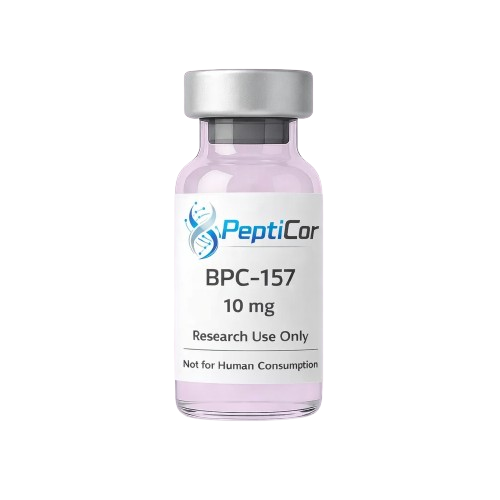
BPC-157
SKU P-BPC-1
$75.00
In stock
1
Product Details
BPC-157 Peptide
BPC-157 (Body Protection Compound-157) is a synthetic peptide consisting of 15 amino acids that represents a partial sequence of body protection compound, a protein that is naturally present in human gastric juice. This pentadecapeptide bears the sequence GEPPPGKPADDAGLV and has been extensively studied for its potential regenerative and protective properties across multiple tissue types.(1) BPC-157 is distinguished by its apparent stability in gastric juice and its reported ability to promote healing in various tissues throughout the body, including tendons, ligaments, muscles, nervous system, and the gastrointestinal tract.
BPC-157 is a synthetic peptide, produced via solid-phase peptide synthesis for research applications. Researchers consider BPC-157 to be a stable gastric peptide with a unique profile of potential biological activities that extend far beyond the gastrointestinal system.(2) The peptide is posited to function through multiple mechanisms, including modulation of growth factor expression, influence on angiogenesis, effects on nitric oxide pathways, and potential interaction with various neurotransmitter systems. Unlike many peptides that are rapidly degraded in biological systems, BPC-157 demonstrates notable stability, which may contribute to its sustained biological activity.
The mechanism by which BPC-157 may potentially promote tissue healing and protection appears to involve complex interactions with multiple cellular signaling pathways. The peptide is considered to influence angiogenesis through modulation of vascular endothelial growth factor (VEGF) and other angiogenic factors, potentially promoting the formation of new blood vessels to support tissue repair. Additionally, BPC-157 may affect nitric oxide (NO) pathways, which play crucial roles in vascular function, inflammation, and tissue healing. This action may result in enhanced blood flow to injured tissues and improved delivery of nutrients and cells necessary for repair in research models.
BPC-157's protective and healing properties are considered to extend across numerous tissue types and physiological systems, suggesting a fundamental role in tissue homeostasis and repair mechanisms. The mechanism by which BPC-157 may potentially accelerate healing appears to involve stabilization of cellular junctions, modulation of inflammatory processes, enhancement of collagen formation, and promotion of cell survival under various stress conditions. These alterations in cellular and tissue-level processes may impact various physiological parameters, which are considered to be critical factors in numerous biological processes related to wound healing, tissue regeneration, protection against injury, and maintenance of tissue integrity.
Chemical Makeup
Molecular Formula: C62H98N16O22
Molecular Weight: 1419.5 g/mol
Sequence: GEPPPGKPADDAGLV
Other Known Titles: Body Protective Compound-157, Bepecin, PL 14736
Research and Clinical Studies
BPC-157 and Gastrointestinal Healing
Research has been undertaken to evaluate the potential actions of BPC-157 on gastrointestinal tissue protection and healing in various experimental models. One study aimed to assess the peptide's role in promoting healing of gastric ulcers and other GI lesions, focusing on its potential to enhance mucosal defense mechanisms and accelerate tissue repair.(3) More specifically, researchers posited that BPC-157 may provide cytoprotective effects in the gastrointestinal tract and may promote healing of various types of GI damage, including ulcers, inflammatory lesions, and surgical wounds.
The study suggests that BPC-157 may promote improvements in gastrointestinal healing in research models through multiple mechanisms. It is posited that BPC-157 may enhance mucosal blood flow, potentially through effects on nitric oxide pathways and angiogenesis. The peptide may also influence the expression of growth factors relevant to GI healing and may affect the function of endothelial cells in the gastrointestinal mucosa. These activities suggest that the peptide might facilitate more rapid and complete healing of GI injuries. The mechanism appears to involve both direct protective effects on GI epithelial cells and enhancement of the tissue repair processes.
Moreover, it is mentioned that BPC-157 has been studied in various contexts of gastrointestinal pathology and has been evaluated for its potential protective effects against various injurious agents, including NSAIDs, alcohol, and ischemia. The peptide's apparent stability in gastric juice is considered particularly relevant for its potential GI applications, as many peptides would be rapidly degraded in this environment. BPC-157 may also influence the healing of intestinal anastomoses and may affect inflammatory processes in the GI tract. Studies suggest that further research is needed to fully understand the peptide's mechanisms of action in gastrointestinal protection and healing and its potential applicability in various GI conditions.
BPC-157 and Tendon Healing
Studies have explored various mechanisms via which BPC-157 may influence tendon healing and regeneration.(4) One proposed mechanism suggests that BPC-157 may enhance the migration and proliferation of tendon fibroblasts, potentially accelerating the cellular response to tendon injury. The improvements in tendon healing observed in research models in the presence of BPC-157 may be mediated by enhanced collagen organization, increased cell density at the injury site, and improved biomechanical properties of healing tendons.
The peptide's effects on tendon healing appear to involve modulation of growth factor expression, particularly factors relevant to tendon and ligament repair. BPC-157 may influence the expression of genes involved in extracellular matrix synthesis and may affect the balance between matrix synthesis and degradation. Studies have investigated the peptide's potential to promote the transition from inflammatory to proliferative phases of tendon healing. The enhanced cellular activity and collagen deposition might contribute to stronger, more functional healing of tendon injuries.
Additionally, the peptide's potential effects on angiogenesis may be particularly relevant for tendon healing, as tendons have relatively poor vascular supply, which can limit their healing capacity. By promoting the formation of new blood vessels in and around the injury site, BPC-157 might improve the delivery of nutrients and cells necessary for repair. Furthermore, the possibility that BPC-157 may influence the mechanical properties of healing tendons has been investigated. The modulation of these pathways might enhance both the speed and quality of tendon healing in research models. Studies have also examined whether BPC-157 might affect tendon-to-bone healing and whether the peptide could influence the prevention of adhesions during tendon repair.
BPC-157 and Ligament Healing
Research has investigated the potential effects of BPC-157 on ligament injuries and healing processes.(5) One study posits that BPC-157 might influence ligament healing through mechanisms similar to those observed in tendon healing, but with specific considerations for ligament structure and function. Preliminary data tentatively suggests that BPC-157 might potentially enhance the healing of various ligament injuries, including complete ruptures and partial tears.
In elaborating on these pathways, ligaments are fibrous connective tissues that connect bones and provide joint stability. Like tendons, ligaments have relatively limited vascular supply, which can impair their natural healing capacity. BPC-157's potential to promote angiogenesis may be particularly beneficial for ligament healing. The peptide may enhance the proliferation of ligament fibroblasts and may influence the organization of collagen fibers in healing ligaments. Studies have suggested that BPC-157 might affect the biomechanical properties of healing ligaments, potentially resulting in stronger and more functional repair.
The mechanism by which BPC-157 may affect ligament healing appears to involve both enhancement of the cellular response to injury and modulation of the extracellular matrix remodeling process. Research has indicated that proper collagen alignment and cross-linking are critical for restoring ligament function, as ligaments must withstand multidirectional forces and provide joint stability. The peptide may influence the transition from granulation tissue to organized ligamentous tissue. Additionally, BPC-157 may affect inflammatory processes during ligament healing, potentially promoting resolution of inflammation while maintaining necessary repair responses. Some studies have investigated whether BPC-157 might enhance the healing of ligament attachment sites to bone, which is often a challenging aspect of ligament repair. These observations suggest that BPC-157 may possibly play a beneficial role in ligament healing, although the precise mechanisms and optimal application strategies continue to be areas of active investigation.
BPC-157 and Muscle Healing
The peptide BPC-157 may have roles in promoting muscle tissue healing and regeneration, based on investigations into its effects on various types of muscle injury. It is thought that BPC-157 might facilitate muscle healing through multiple mechanisms, including enhancement of satellite cell activity, promotion of angiogenesis in muscle tissue, and modulation of inflammatory responses following muscle injury.(6) These processes are considered to potentially involve regulation of myogenic differentiation, enhancement of muscle fiber regeneration, and reduction of fibrosis during muscle repair.
Research has suggested that BPC-157 might particularly contribute to the healing of various types of muscle injuries, including traumatic injuries, laceration injuries, and contusion injuries. Studies have indicated that BPC-157 may possibly enhance the regeneration of muscle fibers and may reduce the formation of scar tissue in healing muscle. The peptide may influence the activity of satellite cells, which are the muscle stem cells responsible for muscle regeneration. Researchers consider these observations as potential indicators of BPC-157's role in promoting functional muscle recovery.
It is posited that by promoting both the cellular aspects of muscle regeneration and the vascular support necessary for tissue repair, BPC-157 might influence the quality and speed of muscle healing. This may involve optimization of muscle fiber alignment, enhancement of neuromuscular junction regeneration, and proper balance between muscle regeneration and fibrotic scar formation. The peptide's potential effects on reducing excessive fibrosis during muscle healing may be particularly important for maintaining muscle flexibility and function. Given the importance of muscle tissue in movement and metabolism, BPC-157's potential to support muscle healing has significant research interest. These potential effects on muscle regeneration are still under investigation and hold promise for applications in various contexts of muscle injury and repair.
BPC-157 and Bone Healing
Studies have explored the potential effects of BPC-157 on bone healing and fracture repair in experimental models. Research suggests that BPC-157 may influence bone regeneration through effects on angiogenesis and potentially through direct effects on bone-forming cells.(7) One proposed mechanism involves BPC-157's ability to promote blood vessel formation in and around fracture sites, which is critical for delivering the cells and nutrients necessary for bone repair.
Investigations have indicated that BPC-157 might potentially enhance the healing of various types of bone injuries, including fractures, bone defects, and impaired bone healing. The peptide's effects appear to involve enhancement of callus formation, the initial step in bone healing where a bridge of new tissue forms across the fracture site. BPC-157 may influence the activity of osteoblasts (bone-forming cells) and may affect the balance between bone formation and bone resorption during the remodeling phase of fracture healing.
The mechanism by which BPC-157 may affect bone healing appears to involve both vascular and cellular components. Research has indicated that adequate vascularization is essential for successful bone healing, as bone tissue has high metabolic demands. BPC-157's pro-angiogenic properties may therefore be particularly relevant for bone repair. Additionally, the peptide may influence the differentiation of mesenchymal stem cells toward osteoblastic lineages. Some studies have investigated whether BPC-157 might enhance the integration of bone grafts or affect the healing of bone in challenging conditions such as impaired healing or non-unions. These potential effects on bone regeneration continue to be investigated, with researchers examining both the cellular mechanisms and the biomechanical outcomes of bone healing in the presence of BPC-157.
BPC-157 and Nerve Healing
Research has investigated the potential neuroprotective and neuroregenerative effects of BPC-157 in various models of nervous system injury. Studies posit that BPC-157 may influence nerve healing and function through multiple mechanisms.(8) Preliminary data tentatively suggests that BPC-157 might potentially promote nerve regeneration, protect neurons from various forms of injury, and may influence neurotransmitter systems.
In elaborating on these pathways, BPC-157 is believed to potentially affect peripheral nerve healing, including crush injuries and transection injuries in experimental models. The peptide may enhance axonal regeneration and may influence the formation of myelin, the insulating sheath around nerve fibers that is essential for proper nerve function. Studies have suggested that BPC-157 might promote the functional recovery of injured nerves, not just anatomical repair. The peptide may also have effects in the central nervous system, with some research investigating potential protective effects in models of brain and spinal cord injury.
The mechanism by which BPC-157 may affect nerve healing appears to involve both direct effects on neurons and indirect effects through enhancement of the cellular and vascular environment supporting nerve regeneration. Research has indicated that BPC-157 might influence nerve growth factor expression and may affect the inflammatory environment following nerve injury. Some studies have investigated whether BPC-157 might promote the regeneration of neuromuscular junctions or affect the recovery of motor function following nerve injury. Additionally, there is research interest in BPC-157's potential effects on various neurotransmitter systems, including dopaminergic, serotonergic, and GABAergic systems, which could have implications for neurological function. These observations suggest that BPC-157 may possibly play a role in nervous system healing and protection, although the precise mechanisms and the full scope of potential neurological effects continue to be areas of active research investigation.
BPC-157 and Vascular Protection
The peptide BPC-157 may have significant roles in vascular health and protection, based on extensive investigations into its effects on blood vessels. It is thought that BPC-157 might influence vascular function through multiple mechanisms, including modulation of nitric oxide pathways, promotion of angiogenesis, and potential protective effects against vascular injury.(9) These processes are considered to potentially involve regulation of endothelial function, enhancement of collateral blood vessel formation, and protection against thrombosis.
Research has suggested that BPC-157 might particularly contribute to vascular protection and healing through its effects on nitric oxide (NO) pathways. Studies have indicated that BPC-157 may interact with the NO system in complex ways, potentially promoting beneficial aspects of NO signaling while modulating excessive or harmful NO production. The peptide has been investigated for potential protective effects against various forms of vascular injury and has been studied in models of ischemia, where blood flow to tissues is compromised. Researchers consider these observations as potential indicators of BPC-157's role in maintaining vascular health and promoting compensation for vascular injury.
It is posited that by promoting angiogenesis and potentially modulating vascular tone, BPC-157 might influence the ability of tissues to adapt to vascular challenges. This may involve formation of collateral blood vessels that can provide alternative routes for blood flow when primary vessels are damaged or blocked. The peptide's potential effects on endothelial cell function may be relevant for maintaining the integrity of the vascular endothelium, which plays crucial roles in regulating blood flow, preventing thrombosis, and controlling vascular inflammation. Some research has investigated whether BPC-157 might influence blood pressure regulation or affect various aspects of cardiovascular function. Given the critical importance of vascular health for tissue healing and overall physiological function, BPC-157's potential vascular effects are of significant research interest. These potential effects on vascular function and protection are still under investigation and hold promise for understanding the peptide's broad effects across multiple tissue systems.
BPC-157 and Blood-Brain Barrier Protection
Studies have explored the potential effects of BPC-157 on blood-brain barrier (BBB) integrity and function. Research suggests that BPC-157 may influence BBB stability and may have protective effects in models where BBB integrity is compromised.(10) One proposed mechanism involves BPC-157's potential to stabilize endothelial tight junctions and modulate the inflammatory processes that can compromise BBB function.
Investigations have indicated that BPC-157 might potentially protect the blood-brain barrier from various injurious factors and may promote the restoration of BBB integrity when it has been compromised. The peptide's effects appear to involve modulation of factors that regulate BBB permeability, including effects on tight junction proteins and endothelial cell function. BPC-157 may influence the inflammatory response associated with BBB disruption and may affect the cellular mechanisms that maintain the specialized properties of brain endothelial cells.
The mechanism by which BPC-157 may affect BBB function appears to involve both direct effects on the endothelial cells that form the BBB and indirect effects through modulation of the neuroinflammatory environment. Research has indicated that maintaining BBB integrity is critical for protecting the brain from potentially harmful substances in the blood and for maintaining the specialized chemical environment required for proper neuronal function. Some studies have investigated whether BPC-157 might have implications for conditions involving BBB dysfunction or might affect the delivery of substances across the BBB. These potential effects on BBB protection continue to be investigated, with researchers examining the mechanisms by which BPC-157 might influence this critical protective barrier and the potential implications for various neurological conditions.
BPC-157 peptide is available for research and laboratory purposes only. Please review our Terms and Conditions before ordering.
Save this product for later
BPC-157