Free shipping for orders over $200
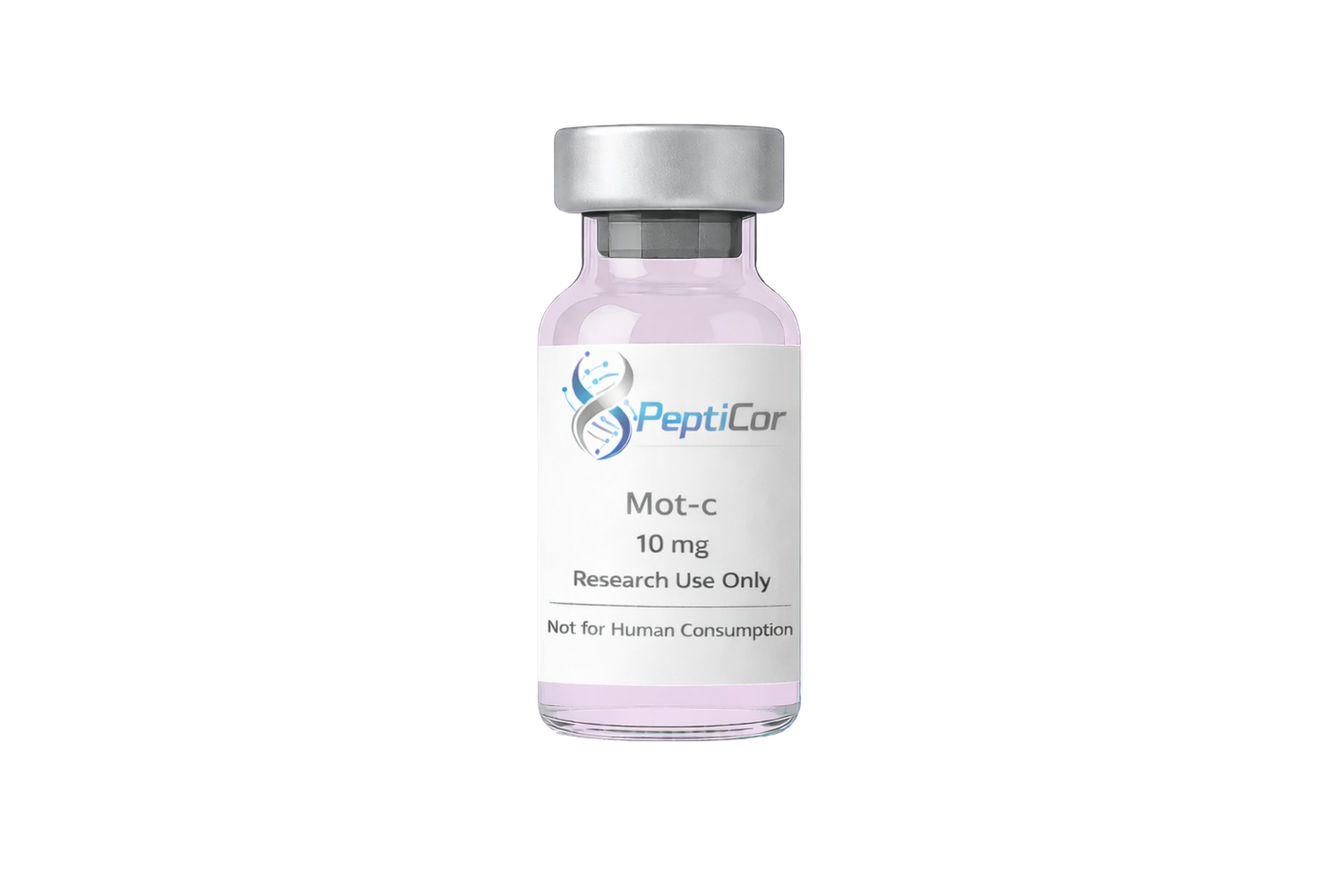
Mots-c
SKU P-MTC-1
$50.00
In stock
Product Details
MOTS-c Peptide
MOTS-c (Mitochondrial Open Reading Frame of the 12S rRNA-c) is a mitochondrial-derived peptide consisting of 16 amino acids that is encoded within the mitochondrial genome. This peptide bears the sequence MRWQEMGYIFYPRKLR and represents a novel class of bioactive molecules that are transcribed from small open reading frames within mitochondrial DNA.(1) MOTS-c is distinguished from nuclear-encoded peptides by its mitochondrial origin and its unique role in mediating communication between mitochondria and the nucleus, a process known as mitochondrial-nuclear crosstalk.
MOTS-c is a naturally occurring peptide that can also be produced synthetically via solid-phase peptide synthesis for research applications. Researchers consider MOTS-c to be a key regulator of metabolic homeostasis, with its primary mechanism of action appearing to involve the modulation of cellular energy metabolism and insulin sensitivity.(2) The peptide is posited to function as a mitochondrial signaling molecule that may influence various metabolic processes throughout the body, including glucose metabolism, lipid oxidation, and mitochondrial function.
Mitochondria are considered to be the powerhouses of the cell, responsible for generating the majority of cellular energy through oxidative phosphorylation. The mechanism by which MOTS-c may potentially influence cellular metabolism appears to involve its translocation from mitochondria to the nucleus under certain metabolic stress conditions, where it may regulate the expression of genes involved in energy metabolism and cellular stress responses. This action may result in enhanced metabolic flexibility and improved cellular adaptation to metabolic challenges in research models.
The metabolic regulatory functions of MOTS-c are considered to extend beyond simple energy production and may play essential roles in various physiological processes, including exercise adaptation, aging, and metabolic disease resistance. The mechanism by which MOTS-c may potentially enhance metabolic function appears to involve the activation of AMPK (AMP-activated protein kinase) signaling pathways and the modulation of folate-methionine metabolism, thereby influencing cellular energy status and metabolic gene expression. These alterations in metabolic signaling may impact various physiological parameters, which are considered to be critical factors in numerous biological processes related to energy balance, metabolic health, and longevity.
Chemical Makeup
Molecular Formula: C121H200N42O32S2
Molecular Weight: 2174.7 g/mol
Sequence: MRWQEMGYIFYPRKLR
Other Known Titles: Mitochondrial-derived peptide, mtORF peptide
Research and Clinical Studies
MOTS-c and Insulin Sensitivity
Research has been undertaken to evaluate the potential actions of MOTS-c on insulin sensitivity and glucose metabolism in various experimental models. One study aimed to assess the peptide's role in enhancing insulin sensitivity, focusing on its potential to improve glucose uptake and utilization in skeletal muscle and other insulin-responsive tissues.(3) More specifically, researchers posited that MOTS-c administration may enhance glucose homeostasis by improving insulin signaling pathways and increasing glucose uptake in peripheral tissues.
The study suggests that MOTS-c may promote improvements in insulin sensitivity in research models through multiple mechanisms. It is posited that MOTS-c may enhance insulin-stimulated glucose uptake in skeletal muscle and may potentially improve whole-body glucose disposal. These activities suggest that the peptide might facilitate improved metabolic health and glucose homeostasis. The mechanism appears to involve activation of AMPK signaling, which is considered a master regulator of cellular energy metabolism. AMPK activation by MOTS-c may enhance glucose transporter translocation to the cell membrane, thereby increasing glucose uptake capacity.
Moreover, it is mentioned that mitochondrial-derived peptides, particularly MOTS-c, have been studied in various contexts of metabolic regulation and have been evaluated for their potential in preventing or ameliorating insulin resistance. The MOTS-c peptide, by enhancing metabolic flexibility and insulin sensitivity, possibly provides protective effects against metabolic dysfunction, although studies suggest that further research is needed to fully understand the peptide's mechanism of action and its potential applicability in metabolic research. Research has also investigated whether MOTS-c might influence hepatic glucose production and whether the peptide could affect pancreatic beta cell function, both of which are important components of systemic glucose homeostasis.
MOTS-c and Exercise Performance
Studies have explored various mechanisms via which MOTS-c may influence exercise capacity and physical performance.(4) One proposed mechanism suggests that MOTS-c may enhance mitochondrial function in skeletal muscle, potentially improving energy production during physical activity. The improvements in exercise capacity observed in research models in the presence of MOTS-c may be mediated by enhanced mitochondrial biogenesis and improved oxidative metabolism in muscle tissue.
The interaction between MOTS-c and exercise adaptation appears to be bidirectional, as exercise itself has been shown to increase endogenous MOTS-c expression in some studies. This suggests that MOTS-c may be part of the adaptive response to physical activity. The peptide's effects on exercise performance might involve improved oxygen utilization, enhanced fatty acid oxidation during prolonged activity, and potentially improved recovery from exercise-induced metabolic stress. These metabolic adaptations are believed to be critical factors in determining exercise capacity and endurance.
Additionally, the peptide's potential effects on skeletal muscle mitochondrial density suggest a mechanism where MOTS-c might influence the capacity of muscle tissue to generate ATP aerobically. By enhancing mitochondrial function and potentially promoting mitochondrial biogenesis, MOTS-c might increase the oxidative capacity of skeletal muscle. Furthermore, the possibility that MOTS-c may reduce exercise-induced metabolic stress and improve metabolic efficiency during physical activity has been investigated. The modulation of these pathways might enhance physical performance and exercise adaptation in research models. Studies have also examined whether MOTS-c might influence muscle fiber composition or affect the metabolic phenotype of skeletal muscle tissue.
MOTS-c and Aging
Research has investigated the potential role of MOTS-c in aging processes and age-related metabolic decline.(5) One study posits that MOTS-c levels may decline with aging, and that this decline might contribute to age-related metabolic dysfunction. Preliminary data tentatively suggests that MOTS-c administration might potentially ameliorate some aspects of age-related metabolic decline in experimental models. Furthermore, it appears that MOTS-c may influence pathways associated with longevity and healthspan.
In elaborating on these pathways, MOTS-c is believed to play a role in maintaining metabolic homeostasis throughout the lifespan. The peptide's potential anti-aging effects may involve multiple mechanisms, including enhancement of mitochondrial function, improvement of insulin sensitivity, and modulation of metabolic flexibility—all of which tend to decline with age. Studies have suggested that MOTS-c might influence cellular stress resistance and could potentially affect the cellular response to metabolic challenges that become more frequent with aging.
The mechanism by which MOTS-c may affect aging processes appears to involve both direct effects on mitochondrial function and indirect effects through modulation of metabolic health. Research has indicated that MOTS-c might potentially influence age-related changes in body composition, including the accumulation of adipose tissue and loss of muscle mass that often accompany aging. Additionally, MOTS-c may affect metabolic parameters that are associated with healthspan and longevity, such as glucose tolerance, lipid metabolism, and inflammatory markers. Some studies have investigated whether MOTS-c might influence the expression of longevity-associated genes or affect cellular senescence pathways. These observations suggest that MOTS-c may possibly play a role in the biology of aging, although the precise mechanisms and the potential for MOTS-c to influence healthspan and lifespan continue to be areas of active investigation.
MOTS-c and Mitochondrial Function
The peptide MOTS-c may have significant roles in regulating mitochondrial function and bioenergetics, based on investigations into its mitochondrial origin and metabolic effects. It is thought that MOTS-c might influence mitochondrial health through multiple mechanisms, including modulation of mitochondrial gene expression, enhancement of oxidative phosphorylation efficiency, and potential effects on mitochondrial biogenesis.(6) These processes are considered to potentially involve regulation of mitochondrial dynamics, mitochondrial quality control, and mitochondrial-nuclear communication.
Research has suggested that MOTS-c might particularly contribute to mitochondrial adaptation under metabolic stress conditions. Studies have indicated that MOTS-c may possibly translocate to the nucleus during glucose restriction, where it may bind to DNA and regulate the expression of genes involved in antioxidant responses and metabolic adaptation. This nuclear translocation represents a unique mechanism by which a mitochondrial-encoded peptide may influence nuclear gene expression. Researchers consider these observations as potential indicators of MOTS-c's role in coordinating cellular responses to metabolic challenges.
It is posited that by regulating mitochondrial function, MOTS-c might influence overall cellular bioenergetics and metabolic capacity. This may involve optimization of ATP production, improvement in the efficiency of oxidative phosphorylation, and potential enhancement of mitochondrial coupling. The peptide's effects on mitochondrial function may also include modulation of reactive oxygen species production and enhancement of mitochondrial antioxidant defenses. Given the central role of mitochondria in cellular metabolism and the implications of mitochondrial dysfunction in various pathological conditions, MOTS-c's potential to support mitochondrial health has significant research interest. These potential effects on mitochondrial function are still under investigation and hold promise for further elucidation in future research, particularly regarding the mechanisms by which MOTS-c coordinates mitochondrial and nuclear functions.
MOTS-c and Metabolic Disorders
Studies have explored the potential protective effects of MOTS-c against various metabolic disorders in experimental models. Research suggests that MOTS-c may influence the development or progression of conditions characterized by metabolic dysfunction, including obesity, insulin resistance, and metabolic syndrome.(7) One proposed mechanism involves MOTS-c's ability to enhance metabolic flexibility and improve the body's capacity to adapt to different metabolic states.
Investigations have indicated that MOTS-c might potentially prevent or ameliorate diet-induced metabolic dysfunction in research models. The peptide's effects appear to involve multiple pathways, including enhancement of glucose metabolism, improvement in lipid oxidation, and potential modulation of inflammatory processes associated with metabolic disease. Studies have suggested that MOTS-c administration might reduce the accumulation of ectopic lipids in tissues such as liver and skeletal muscle, which is associated with insulin resistance and metabolic dysfunction.
The mechanism by which MOTS-c may protect against metabolic disorders appears to involve both direct metabolic effects and indirect effects through improvement of overall metabolic health. Research has indicated that MOTS-c might influence the metabolic response to high-fat diet challenge, potentially preventing some of the adverse metabolic consequences of caloric excess. Additionally, MOTS-c may affect adipose tissue function and could potentially influence the secretion of adipokines that play roles in systemic metabolism. Some investigations have examined whether MOTS-c might influence the gut-liver-muscle metabolic axis or affect the relationship between different metabolic organs. These potential protective effects of MOTS-c against metabolic disorders continue to be investigated in various experimental contexts, with researchers examining the peptide's effects on multiple metabolic parameters and exploring its potential mechanisms of metabolic protection.
MOTS-c and Skeletal Muscle Metabolism
Research has investigated the specific effects of MOTS-c on skeletal muscle tissue and muscle metabolism. Studies posit that skeletal muscle may be a primary target tissue for MOTS-c's metabolic actions.(8) Preliminary data tentatively suggests that MOTS-c might potentially enhance glucose uptake in muscle tissue, improve mitochondrial function in myocytes, and could affect muscle metabolic phenotype.
In elaborating on these pathways, skeletal muscle is believed to be a major site of glucose disposal and plays a crucial role in whole-body metabolic homeostasis. MOTS-c's effects on muscle metabolism may involve enhancement of insulin signaling in muscle tissue, leading to improved glucose uptake capacity. The peptide may also influence the expression of metabolic genes in muscle, potentially affecting the balance between glucose and lipid utilization in this tissue. Studies have suggested that MOTS-c might enhance oxidative metabolism in skeletal muscle, which could improve the muscle's capacity to utilize fatty acids as fuel.
The mechanism by which MOTS-c specifically affects skeletal muscle appears to involve both intracellular signaling within muscle cells and potential systemic effects that influence muscle metabolism. Research has indicated that MOTS-c might affect muscle fiber type composition or metabolic characteristics in some experimental models. Additionally, MOTS-c may influence the adaptive response of muscle to metabolic challenges, such as exercise or dietary changes. Some studies have investigated whether MOTS-c might affect muscle protein metabolism or influence the balance between muscle protein synthesis and degradation. The peptide's effects on muscle mitochondrial density and function are of particular interest, as mitochondrial capacity in skeletal muscle is closely linked to metabolic health and exercise capacity. These observations suggest that MOTS-c may play an important role in skeletal muscle metabolism and may be particularly relevant for understanding muscle metabolic adaptation, although the precise mechanisms and the therapeutic implications continue to be areas of active research investigation.
MOTS-c peptide is available for research and laboratory purposes only. Please review our Terms and Conditions before ordering.
Save this product for later
Mots-c