Free shipping for orders over $200
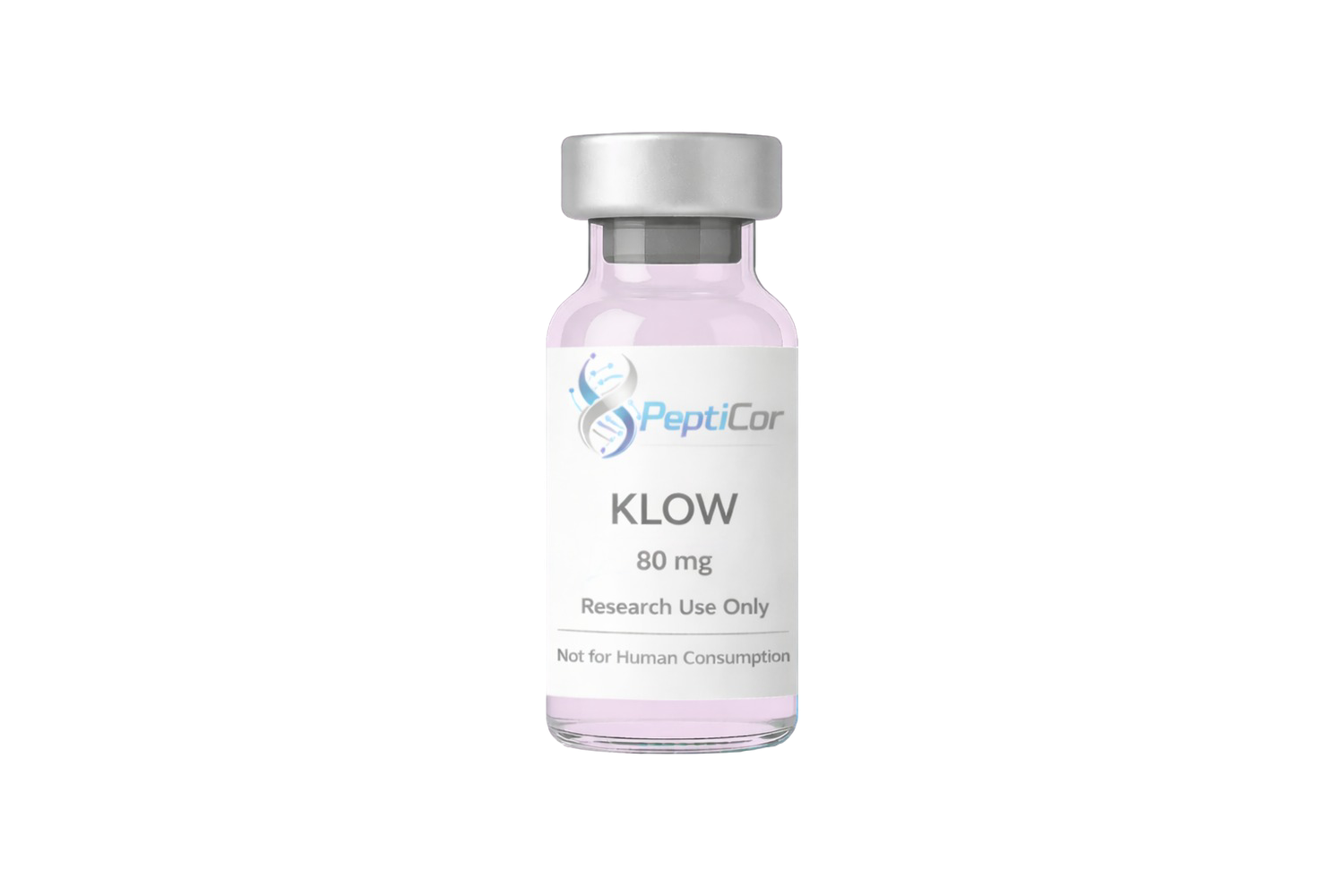
KLOW (CU50+TB10+BC10+KPV10)
SKU P-KLC-1
$165.00
In stock
1
Product Details
KLOW Peptide Blend
KLOW is a synergistic peptide blend consisting of four distinct bioactive peptides formulated to provide complementary effects on tissue repair, inflammation modulation, and cellular regeneration. The blend contains GHK-Cu (Copper Peptide), Thymosin Beta-4 Fragment (TB-500), BPC-157 (Body Protection Compound-157), and KPV (Lysine-Proline-Valine) in a specific ratio designed to optimize their collective biological activities.(1) This unique combination represents a multi-targeted approach to tissue healing and regeneration, with each component contributing distinct but complementary mechanisms of action.
KLOW is formulated using synthetic peptides produced via solid-phase peptide synthesis. Researchers consider this multi-peptide approach to be particularly effective because each component may address different aspects of the tissue repair and regeneration process.(2) GHK-Cu is a naturally occurring tripeptide that chelates copper ions and is posited to play roles in wound healing, tissue remodeling, and antioxidant activity. Thymosin Beta-4 Fragment (TB-500) is considered to promote angiogenesis, cell migration, and tissue regeneration. BPC-157, a pentadecapeptide derived from body protection compound, is believed to enhance healing of various tissues including tendons, ligaments, and the gastrointestinal tract. KPV is a C-terminal tripeptide of alpha-melanocyte stimulating hormone (α-MSH) that is posited to possess anti-inflammatory and antimicrobial properties.
The synergistic mechanism by which KLOW may potentially enhance tissue repair and regeneration appears to involve the coordinated activation of multiple cellular pathways. GHK-Cu may promote collagen synthesis and tissue remodeling while providing antioxidant protection. TB-500 may facilitate cell migration and angiogenesis, which are critical for delivering nutrients and cells to injured tissue. BPC-157 may enhance the stability of the extracellular matrix and promote the healing of various tissue types. KPV may modulate inflammatory responses, potentially creating a more favorable environment for tissue repair. This multi-faceted action may result in enhanced healing responses compared to single-peptide approaches in research models.
The four components of KLOW are considered to not only address different aspects of tissue repair but may also work synergistically to optimize the healing process. The mechanism by which this peptide blend may potentially accelerate tissue regeneration appears to involve the simultaneous modulation of inflammation, enhancement of cell migration and proliferation, promotion of angiogenesis, and support of extracellular matrix remodeling. These coordinated alterations in cellular and tissue-level processes may impact various physiological parameters, which are considered to be critical factors in numerous biological processes related to wound healing, tissue repair, and regenerative capacity.
Chemical Makeup
KLOW Blend Composition:
- GHK-Cu (50%): Molecular Formula C14H24N6O4Cu, Molecular Weight 340.4 g/mol
- TB-500 (10%): Thymosin Beta-4 Fragment, Molecular Weight ~5000 g/mol
- BPC-157 (10%): Molecular Formula C62H98N16O22, Molecular Weight 1419.5 g/mol
- KPV (30%): Molecular Formula C17H32N4O4, Molecular Weight 356.5 g/mol
Other Known Titles: Multi-peptide regenerative blend, Synergistic healing complex
Research and Clinical Studies
KLOW and Wound Healing
Research has been undertaken to evaluate the potential synergistic actions of peptide combinations similar to KLOW on wound healing processes in various experimental models. Studies aimed to assess how multiple peptides with complementary mechanisms might enhance wound closure, focusing on parameters such as re-epithelialization, collagen deposition, angiogenesis, and inflammation modulation.(3) More specifically, researchers posited that combining peptides with distinct mechanisms—such as GHK-Cu for collagen synthesis and antioxidant activity, TB-500 for cell migration and angiogenesis, BPC-157 for tissue stability and healing, and KPV for inflammation control—might produce superior wound healing outcomes compared to individual peptides.
The research suggests that multi-peptide formulations may promote enhanced wound healing in research models through multiple complementary mechanisms. It is posited that GHK-Cu may stimulate fibroblast proliferation and collagen synthesis while providing copper-dependent antioxidant protection to healing tissues. TB-500 may facilitate keratinocyte migration and endothelial cell movement, accelerating wound closure and neovascularization. BPC-157 may enhance the structural integrity of healing tissue and promote angiogenesis through VEGF-related pathways. KPV may modulate the inflammatory phase of wound healing, potentially preventing excessive inflammation while maintaining necessary immune responses. These activities suggest that the peptide blend might facilitate more efficient and complete wound closure.
Moreover, it is mentioned that combination peptide approaches have been studied in various contexts of tissue repair and have been evaluated for their potential to address multiple limiting factors in the healing process simultaneously. The synergistic action of multiple peptides may overcome limitations that single peptides face, as different peptides can target different rate-limiting steps in the complex wound healing cascade. Studies suggest that further research is needed to fully understand the optimal ratios and combinations of peptides and their collective mechanisms of action in wound healing applications.
KLOW and Inflammation Modulation
Studies have explored various mechanisms via which peptide combinations like KLOW may modulate inflammatory responses during tissue injury and repair.(4) One proposed mechanism suggests that the inclusion of KPV provides specific anti-inflammatory activity through interaction with inflammatory signaling pathways, while other components may address different aspects of the inflammatory response. The modulation of inflammation observed in research models in the presence of multi-peptide formulations may be mediated by effects on multiple inflammatory mediators and pathways.
KPV is considered to exert anti-inflammatory effects through inhibition of inflammatory transcription factors, particularly by preventing the translocation of NF-κB to the nucleus, thereby reducing the expression of pro-inflammatory cytokines. This mechanism may help create an optimal inflammatory environment for healing—neither too inflammatory (which can cause excessive tissue damage) nor too suppressed (which can impair necessary immune functions). Additionally, GHK-Cu may contribute to inflammation modulation through its antioxidant properties, potentially reducing oxidative stress-induced inflammation. BPC-157 has been investigated for potential effects on inflammatory pathways and may influence the balance between pro-inflammatory and anti-inflammatory signals.
The combination of these peptides might provide comprehensive inflammation management throughout the healing process. The acute inflammatory phase is necessary for initiating repair, but prolonged or excessive inflammation can impair healing. The peptide blend may help transition tissues from inflammatory to proliferative phases more efficiently. Furthermore, the possibility that multi-peptide approaches may reduce chronic inflammation while preserving acute inflammatory responses has been investigated. These pathways are considered to regulate the balance between tissue destruction and repair. The modulation of these pathways by peptide combinations might optimize the inflammatory component of tissue healing in research models.
KLOW and Angiogenesis
Research has investigated the potential effects of peptide combinations on angiogenesis and vascular development during tissue repair.(5) One study posits that multiple components of formulations like KLOW might contribute to enhanced angiogenesis through different mechanisms. Preliminary data tentatively suggests that TB-500 and BPC-157 might both potentially promote angiogenesis, but through distinct pathways that could be complementary.
In elaborating on these pathways, TB-500 is believed to promote angiogenesis through effects on endothelial cell migration and tube formation. The peptide may enhance the expression of angiogenic factors and promote the organization of endothelial cells into vascular structures. BPC-157 has been studied for potential effects on VEGF (vascular endothelial growth factor) pathways and may influence angiogenesis through modulation of growth factor signaling. The combination of these angiogenic peptides might result in more robust vascularization of healing tissues compared to either peptide alone.
Additionally, GHK-Cu may support angiogenesis through its effects on extracellular matrix remodeling and through copper-dependent enzymatic processes involved in blood vessel formation. The presence of copper is considered important for several enzymes involved in angiogenesis and connective tissue synthesis. The mechanism by which multiple pro-angiogenic peptides may work together appears to involve both direct effects on endothelial cells and indirect effects through modulation of the tissue microenvironment to favor vascular development. These observations suggest that multi-peptide formulations may possibly provide superior angiogenic support during tissue healing, although the precise mechanisms of synergy and the optimal combinations continue to be areas of active investigation.
KLOW and Collagen Synthesis
The peptide blend KLOW may have significant roles in promoting collagen synthesis and extracellular matrix remodeling, based on investigations into the effects of its individual components. It is thought that multiple peptides in the formulation might influence different aspects of collagen metabolism, including synthesis, organization, and maturation.(6) These processes are considered to potentially involve stimulation of fibroblast activity, enhancement of collagen gene expression, and modulation of matrix metalloproteinases.
Research has suggested that GHK-Cu might particularly contribute to collagen synthesis through its effects on fibroblast proliferation and activation. Studies have indicated that GHK-Cu may possibly enhance the expression of collagen types I and III, which are crucial for providing tensile strength to healing tissues. The copper component is believed to be essential for the activity of lysyl oxidase, an enzyme critical for collagen cross-linking and maturation. Researchers consider these observations as potential indicators of enhanced tissue strength and quality during healing.
It is posited that by combining peptides that promote both collagen synthesis and proper tissue organization, formulations like KLOW might influence the quality of healed tissue, not just the speed of healing. This may involve optimization of collagen fiber alignment, enhancement of collagen maturation and cross-linking, and proper balance between collagen deposition and remodeling. TB-500 and BPC-157 may contribute to the organization of newly synthesized collagen by promoting cell migration and tissue architecture development. The comprehensive approach to extracellular matrix development provided by multi-peptide formulations may result in stronger, more functional healed tissue. These potential effects on collagen synthesis and organization are still under investigation and hold promise for applications requiring high-quality tissue regeneration.
KLOW and Tendon/Ligament Healing
Studies have explored the potential effects of peptide combinations on connective tissue healing, particularly in tendons and ligaments. Research suggests that formulations like KLOW may influence the healing of these specialized tissues through multiple complementary mechanisms.(7) One proposed mechanism involves the combined effects of TB-500 on cell migration and tissue organization, BPC-157 on tendon-specific healing pathways, and GHK-Cu on collagen synthesis and maturation.
Investigations have indicated that BPC-157 might have particular affinity for healing tendons and ligaments, possibly through effects on tendon fibroblasts and modulation of growth factor pathways relevant to these tissues. TB-500 may enhance the migration of tendon cells to injury sites and may influence the alignment of collagen fibers in healing connective tissue. The peptide's effects on actin dynamics may be particularly relevant for tissues that require specific structural organization. GHK-Cu's promotion of collagen synthesis and cross-linking may contribute to the mechanical strength of healing tendons and ligaments.
The mechanism by which multi-peptide approaches may affect connective tissue healing appears to involve both enhancement of the proliferative phase and optimization of the remodeling phase. Research has indicated that proper collagen alignment and maturation are critical for functional recovery of tendons and ligaments, as these tissues must withstand significant mechanical forces. The combination of peptides addressing different aspects of the healing process—cell migration, proliferation, collagen synthesis, and inflammation control—may result in more complete functional recovery. Additionally, these formulations may influence the transition from granulation tissue to organized connective tissue. Some studies have investigated whether multi-peptide approaches might reduce scar tissue formation while promoting functional tissue regeneration. These potential benefits for connective tissue healing continue to be investigated, with researchers examining biomechanical properties, histological characteristics, and functional outcomes in various experimental models.
KLOW and Gastrointestinal Healing
Research has investigated the potential protective and healing effects of peptide combinations on gastrointestinal tissues. Studies posit that certain peptides, particularly BPC-157, may have significant effects on GI tissue integrity and healing.(8) Preliminary data tentatively suggests that BPC-157 might potentially protect against various forms of GI injury and may promote healing of gastric and intestinal tissues through multiple mechanisms.
In elaborating on these pathways, BPC-157 is believed to promote GI healing through effects on mucosal blood flow, modulation of various growth factors, and potential interaction with nitric oxide pathways. The peptide may enhance the cytoprotective mechanisms of the GI mucosa and may promote angiogenesis in damaged GI tissues. The inclusion of other peptides in formulations like KLOW may provide complementary benefits—KPV's anti-inflammatory properties may help control intestinal inflammation, while GHK-Cu and TB-500 may support general tissue repair mechanisms.
The mechanism by which multi-peptide formulations may affect GI healing appears to involve protection against various injurious factors, enhancement of mucosal defense mechanisms, and promotion of tissue regeneration. Research has indicated that BPC-157 might influence the healing of various GI conditions in experimental models, including gastric ulcers, inflammatory bowel conditions, and intestinal anastomoses. The addition of anti-inflammatory components like KPV may be particularly relevant for conditions involving GI inflammation. Some studies have investigated whether these peptide combinations might influence gut barrier function or affect the mucosal immune system. These observations suggest that multi-peptide formulations may possibly provide comprehensive support for GI tissue health, although the precise mechanisms, optimal formulations, and the full range of potential applications continue to be areas of active research investigation.
KLOW and Antimicrobial Properties
The peptide blend KLOW may possess antimicrobial properties that could contribute to wound healing outcomes, primarily through the KPV component. Research suggests that KPV may exhibit antimicrobial activity against various microorganisms.(9) One proposed mechanism involves the peptide's ability to interact with microbial membranes or interfere with microbial inflammatory responses, potentially creating an environment less favorable for infection while promoting healing.
Investigations have indicated that KPV might potentially exhibit activity against certain bacterial strains and may also possess anti-inflammatory properties that could be relevant in the context of infected or colonized wounds. The antimicrobial properties of KPV may complement the healing-promoting effects of the other peptides in the blend, as infection control is a critical factor in successful wound healing. Wounds that become infected typically heal more slowly and may develop complications, so the potential antimicrobial activity of components in peptide blends may contribute to overall healing outcomes.
The mechanism by which KPV may exert antimicrobial effects appears to involve multiple potential pathways, which may include direct effects on microorganisms as well as immunomodulatory effects that enhance the body's natural antimicrobial defenses. Some research has investigated whether peptides like KPV might work synergistically with the immune system to control microbial colonization of wounds. The combination of antimicrobial activity with the healing-promoting effects of GHK-Cu, TB-500, and BPC-157 may provide a comprehensive approach to managing wounds at risk for infection. These potential antimicrobial properties continue to be investigated, with researchers examining the spectrum of antimicrobial activity, mechanisms of action, and the clinical relevance of these effects in various wound healing contexts.
KLOW peptide blend is available for research and laboratory purposes only. Please review our Terms and Conditionsbefore ordering.
Save this product for later
KLOW (CU50+TB10+BC10+KPV10)