Free shipping for orders over $200
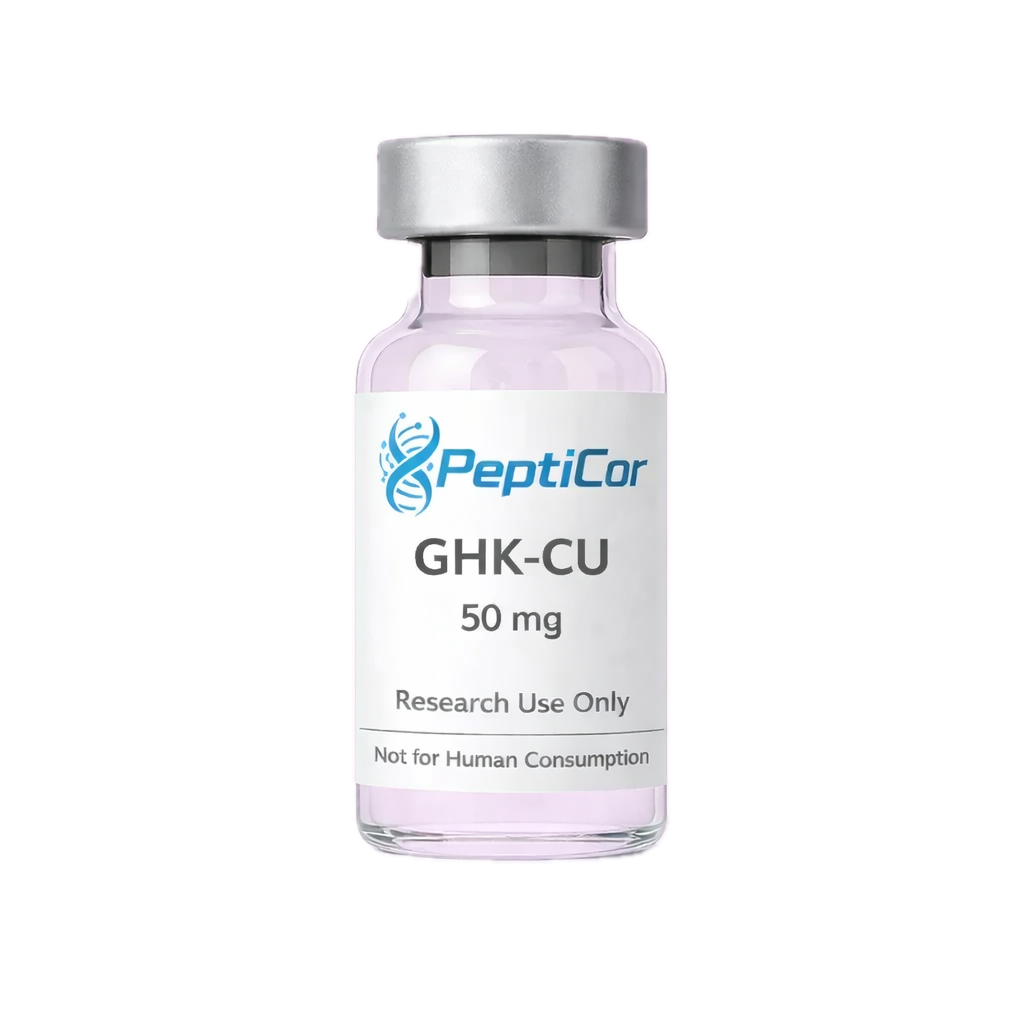
GHK-CU
SKU P-GHK-1
$40.00
In stock
1
Product Details
Shipping: Please allow 7-14 days for delivery.
GHK-Cu (glycyl-L-histidyl-L-lysine-copper) is a naturally occurring copper-binding tripeptide that has been extensively studied for its remarkable regenerative and protective properties across multiple tissue types.(1) This three-amino acid peptide naturally complexes with copper ions (Cu2+) and is found in human plasma, saliva, and urine, with concentrations that decline significantly with age. GHK-Cu is distinguished by its ability to promote tissue remodeling, enhance wound healing, stimulate collagen and elastin production, and modulate gene expression patterns associated with tissue health and regeneration.
GHK-Cu is produced via solid-phase peptide synthesis and complexed with copper ions for research applications. Researchers consider GHK-Cu to be a multifunctional signaling molecule with a unique profile of biological activities that extend across dermatological, regenerative, and age-related research contexts.(2) The peptide is posited to function through multiple mechanisms, including modulation of gene expression affecting tissue remodeling, influence on growth factor activity, effects on inflammatory processes, and antioxidant properties mediated by copper chelation. Unlike many peptides that act through a single pathway, GHK-Cu demonstrates pleiotropic effects influencing hundreds of genes involved in tissue repair, inflammation control, and cellular health.
The mechanism by which GHK-Cu may potentially promote tissue regeneration appears to involve complex interactions with multiple cellular and molecular systems. The peptide is considered to modulate the expression of numerous genes involved in tissue remodeling, including upregulation of genes associated with tissue repair and downregulation of genes associated with inflammation and tissue degradation. Additionally, GHK-Cu may enhance growth factor activity, stimulate fibroblast proliferation and migration, promote angiogenesis, and provide antioxidant protection through copper chelation. This action may result in enhanced wound healing, improved skin appearance, increased collagen density, and overall tissue rejuvenation in various experimental models.
GHK-Cu's regenerative and protective properties are considered to extend across numerous tissue types and physiological systems, suggesting a fundamental role in tissue maintenance and repair mechanisms. The mechanism by which GHK-Cu may potentially influence tissue health appears to involve both direct effects on cellular behavior and indirect effects through modulation of the tissue microenvironment, extracellular matrix composition, and inflammatory status. These alterations in cellular and tissue-level processes may impact various physiological parameters, which are considered to be critical factors in numerous biological processes related to wound healing, skin aging, hair growth, tissue remodeling, and age-related tissue deterioration.
Chemical Makeup
Molecular Formula: C14H24N6O4Cu (with copper complex)
Molecular Weight: 403.93 g/mol (with copper)
Sequence: Gly-His-Lys (G-H-K) complexed with Cu2+
Other Known Titles: Copper Peptide GHK, GHK-Copper, Glycyl-L-Histidyl-L-Lysine:Copper Complex
Research and Clinical Studies
GHK-Cu and Wound Healing
Research has been undertaken to evaluate the potential actions of GHK-Cu on wound healing processes and tissue repair mechanisms in various experimental models. One study aimed to assess the peptide's ability to accelerate wound closure and improve healing quality, focusing on its potential to enhance multiple phases of the wound healing process.(3) More specifically, researchers posited that GHK-Cu may promote faster wound closure, enhance collagen deposition, improve wound tensile strength, and reduce excessive scarring through its multifaceted effects on tissue repair mechanisms.
The study suggests that GHK-Cu may enhance wound healing in research models through modulation of numerous cellular processes critical for repair. It is posited that GHK-Cu may stimulate fibroblast migration to wound sites, potentially enhancing the cellular response necessary for tissue repair. The peptide may also increase collagen synthesis and proper collagen organization in healing tissue, improve re-epithelialization rates, and promote angiogenesis to support metabolic demands of healing tissue. These activities suggest that the peptide might facilitate both faster and higher-quality wound healing. The mechanism appears to involve coordinated effects on inflammation resolution, proliferative responses, and tissue remodeling phases of healing.
Moreover, it is mentioned that GHK-Cu has been studied in various wound types including surgical wounds, burn injuries, diabetic ulcers, and chronic wounds. The peptide's ability to modulate gene expression patterns is considered particularly relevant for wound healing applications, as proper healing requires coordinated regulation of hundreds of genes. GHK-Cu may influence the transition from inflammatory to proliferative phases of healing and may promote proper remodeling that minimizes excessive scar formation. Studies suggest that further research is needed to fully understand the peptide's effects across different wound types and its potential optimal application strategies for various wound healing contexts.
GHK-Cu and Skin Regeneration
Studies have explored various mechanisms via which GHK-Cu may influence skin structure, function, and appearance in aging and photoaged skin.(4) One proposed mechanism suggests that GHK-Cu may improve skin quality through stimulation of collagen and elastin synthesis, enhancement of glycosaminoglycan production, and modulation of metalloproteinase activity that affects extracellular matrix turnover. The improvements in skin parameters observed in research models in the presence of GHK-Cu may be mediated by increased dermal thickness, improved skin elasticity, enhanced skin firmness, and reduction in the appearance of fine lines and wrinkles.
The peptide's effects on skin regeneration appear to involve modulation of multiple aspects of dermal and epidermal biology, particularly those relevant to maintaining youthful skin characteristics. GHK-Cu may influence the expression of genes involved in collagen synthesis, with studies showing increased production of collagen types I and III in dermal fibroblasts. Studies have investigated the peptide's potential to stimulate the production of decorin and other proteoglycans that contribute to skin hydration and structural organization. The enhanced extracellular matrix synthesis might contribute to improvements in skin thickness, elasticity, and overall appearance in research models.
Additionally, the peptide's ability to decrease the activity of certain matrix metalloproteinases (MMPs) that degrade collagen and elastin may be particularly relevant for skin aging research, as excessive MMP activity contributes to age-related skin deterioration. By simultaneously increasing matrix synthesis and decreasing degradation, GHK-Cu might optimize the balance of skin remodeling. Furthermore, the possibility that GHK-Cu may influence skin stem cell behavior and keratinocyte proliferation has been investigated. The modulation of these pathways might enhance both the structural and functional aspects of skin rejuvenation in research models. Studies have also examined whether GHK-Cu might affect skin barrier function or influence the skin's capacity for repair following injury or environmental damage.
GHK-Cu and Hair Growth
Research has investigated the potential effects of GHK-Cu on hair follicle health and hair growth in various experimental models. Studies posit that GHK-Cu might influence hair growth through mechanisms related to enlargement of hair follicles, stimulation of follicle cell proliferation, and modulation of factors that regulate the hair growth cycle.(5) Preliminary data tentatively suggests that GHK-Cu might potentially increase hair follicle size, prolong the anagen (growth) phase, and affect the transition between hair cycle phases.
In elaborating on these pathways, hair growth is a complex process involving cyclic transitions between growth (anagen), regression (catagen), and resting (telogen) phases. GHK-Cu's effects on tissue remodeling and cellular proliferation may influence hair follicle cycling. The peptide may stimulate the proliferation of dermal papilla cells, which play crucial regulatory roles in hair growth. Studies have suggested that GHK-Cu might increase blood flow to hair follicles, potentially improving nutrient and oxygen delivery. The peptide may also influence growth factors relevant to hair follicle development and cycling in research models.
The mechanism by which GHK-Cu may affect hair growth appears to involve both direct effects on hair follicle cells and indirect effects through enhancement of the follicular microenvironment. Research has indicated that factors influencing hair follicle size, cell proliferation rates, and cycle regulation can significantly impact hair growth and hair thickness. The peptide may influence the expression of genes involved in hair follicle development and may affect signaling pathways that regulate follicle activity. Some studies have investigated whether GHK-Cu might have implications for various types of hair loss or might affect hair characteristics such as thickness and density. These observations suggest that GHK-Cu may possibly play a role in hair follicle biology, although the precise mechanisms and clinical significance continue to be areas of active investigation.
GHK-Cu and Collagen Synthesis
The peptide GHK-Cu may have significant roles in collagen production and extracellular matrix remodeling, based on investigations into its effects on fibroblast activity and matrix protein synthesis. It is thought that GHK-Cu might influence collagen synthesis through multiple mechanisms, including stimulation of fibroblast metabolic activity, enhancement of mRNA expression for collagen genes, and modulation of factors that regulate collagen assembly.(6) These processes are considered to potentially involve regulation of transforming growth factor-beta (TGF-β) signaling, enhancement of procollagen synthesis and processing, and optimization of collagen fibril organization.
Research has suggested that GHK-Cu might particularly enhance the production of Type I and Type III collagen, the major structural collagens in skin and other connective tissues. Studies have indicated that GHK-Cu may increase the rate of collagen synthesis in fibroblasts and may affect the quality and organization of newly synthesized collagen. The peptide may influence the activity of enzymes involved in collagen maturation and cross-linking, potentially affecting the mechanical properties of collagen-containing tissues. Researchers consider these observations as potential indicators of GHK-Cu's role in maintaining and restoring tissue structural integrity.
It is posited that by enhancing collagen production while also modulating collagen degradation through effects on MMPs, GHK-Cu might optimize collagen turnover and tissue remodeling. This may involve stimulation of the cellular machinery for protein synthesis, enhancement of collagen gene transcription, and proper regulation of the balance between synthesis and degradation. The peptide's potential effects on increasing tissue collagen content may be particularly important for research examining tissue aging, wound healing, and structural tissue deterioration. Some research has investigated whether GHK-Cu might affect collagen production in different tissue types or might influence the ratio of different collagen types produced. Given the fundamental importance of collagen for tissue structure and function, GHK-Cu's effects on collagen metabolism are of significant research interest. These potential effects on collagen synthesis are still under investigation and hold promise for applications in various contexts of tissue repair and regeneration.
GHK-Cu and Anti-Inflammatory Effects
Studies have explored the potential anti-inflammatory properties of GHK-Cu in various experimental models of inflammation. Research suggests that GHK-Cu may influence inflammatory processes through modulation of inflammatory cytokine production, effects on immune cell behavior, and potential antioxidant-mediated anti-inflammatory mechanisms.(7) One proposed mechanism involves the peptide's ability to reduce the production of inflammatory mediators while potentially enhancing anti-inflammatory responses.
Investigations have indicated that GHK-Cu might potentially reduce the production of pro-inflammatory cytokines including TNF-α, IL-1, and IL-6 in various experimental contexts. The peptide's effects appear to involve modulation of inflammatory signaling pathways and potential effects on the activation state of inflammatory cells. GHK-Cu may influence the balance between pro-inflammatory and anti-inflammatory immune responses, potentially promoting inflammation resolution. The peptide may also affect the recruitment of inflammatory cells to sites of tissue damage or inflammation.
The mechanism by which GHK-Cu may exert anti-inflammatory effects appears to involve multiple pathways including direct effects on inflammatory gene expression and indirect effects through tissue protective mechanisms. Research has indicated that controlled inflammation resolution is critical for optimal tissue healing and that excessive or prolonged inflammation impairs repair processes. Some studies have investigated whether GHK-Cu might affect specific inflammatory pathways or might influence chronic inflammatory conditions. These potential anti-inflammatory effects continue to be investigated, with researchers examining how GHK-Cu's anti-inflammatory properties contribute to its overall tissue regenerative effects.
GHK-Cu and Antioxidant Properties
Research has investigated the potential antioxidant effects of GHK-Cu and its role in protecting tissues from oxidative damage. Studies posit that GHK-Cu might provide antioxidant protection through mechanisms related to copper chelation, modulation of antioxidant enzyme expression, and potential direct free radical scavenging activities.(8) Preliminary data tentatively suggests that GHK-Cu might potentially reduce markers of oxidative stress and protect cellular components from oxidative damage.
In elaborating on these pathways, oxidative stress results from an imbalance between reactive oxygen species (ROS) production and antioxidant defenses, and contributes to tissue aging, damage, and various pathological conditions. GHK-Cu's copper-binding properties may play important roles in regulating copper availability and preventing copper-catalyzed oxidative reactions. The peptide may influence the expression or activity of antioxidant enzymes including superoxide dismutase, catalase, and others that neutralize ROS. Studies have suggested that GHK-Cu might reduce lipid peroxidation, a marker of oxidative damage to cell membranes in research models.
The mechanism by which GHK-Cu may provide antioxidant protection appears to involve both its copper-chelating properties and potential effects on cellular antioxidant defense systems. Research has indicated that proper regulation of transition metal ions like copper is important for preventing oxidative damage, as free copper can catalyze harmful oxidative reactions. The peptide may also influence cellular responses to oxidative stress or may protect specific cellular components from oxidative damage. Some studies have investigated whether GHK-Cu might have particular protective effects against UV-induced oxidative damage or might affect age-related accumulation of oxidative damage. These observations suggest that GHK-Cu may possibly provide antioxidant protection to tissues, although the relative contributions of different mechanisms continue to be areas of active investigation.
GHK-Cu and Gene Expression Modulation
Studies have explored the potential effects of GHK-Cu on gene expression patterns, with research suggesting that the peptide may influence the expression of hundreds of genes relevant to tissue health and aging. Research suggests that GHK-Cu may modulate gene expression through effects on transcription factors, signaling pathways, and potentially epigenetic mechanisms.(9) One proposed mechanism involves the peptide's influence on genes involved in tissue remodeling, inflammation, oxidative stress responses, and cellular metabolism.
Investigations using gene expression profiling have indicated that GHK-Cu might potentially affect the expression of numerous genes, with research suggesting effects on genes related to extracellular matrix remodeling, growth factor signaling, inflammatory responses, and cellular stress responses. The peptide's effects appear to involve both upregulation of genes associated with tissue repair and regeneration and downregulation of genes associated with inflammation and tissue degradation. GHK-Cu may influence genes encoding matrix metalloproteinases, their inhibitors, collagen types, growth factors, and inflammatory mediators. The peptide may also affect genes involved in cellular energy metabolism and stress responses.
The mechanism by which GHK-Cu may affect gene expression appears to involve complex interactions with cellular signaling systems and potentially transcriptional regulatory mechanisms. Research has indicated that the broad effects of GHK-Cu on multiple tissue parameters may be mediated in part by its wide-ranging effects on gene expression patterns. Some studies have investigated whether GHK-Cu might shift gene expression profiles toward patterns associated with younger, healthier tissue or might counteract age-related gene expression changes. These potential effects on gene expression continue to be investigated, with researchers examining how GHK-Cu's gene modulatory effects contribute to its diverse biological activities and tissue regenerative properties.
GHK-Cu and Scar Reduction
Research has investigated the potential effects of GHK-Cu on scar formation and scar appearance in various experimental models. Studies posit that GHK-Cu might influence scarring through mechanisms related to modulation of wound healing processes, effects on collagen organization, and potential anti-fibrotic properties.(10) Preliminary data tentatively suggests that GHK-Cu might potentially reduce excessive scar formation and may improve the appearance of existing scars.
In elaborating on these pathways, scar formation results from the normal wound healing process but can become problematic when excessive or disorganized. GHK-Cu's effects on wound healing and collagen remodeling may influence scar development. The peptide may promote more organized collagen deposition, potentially resulting in scars with better cosmetic appearance and functional properties. Studies have suggested that GHK-Cu might affect the balance between different collagen types in healing wounds, with implications for scar quality. The peptide may also influence fibroblast behavior in ways that reduce excessive fibrosis and contracture in research models.
The mechanism by which GHK-Cu may affect scarring appears to involve optimization of the wound healing process to favor regeneration over excessive fibrotic responses. Research has indicated that factors influencing collagen organization, the ratio of different extracellular matrix components, and the regulation of myofibroblast activity can all impact scar formation. The peptide may influence the transformation of fibroblasts into myofibroblasts, cells that contribute to wound contraction and scarring. Some studies have investigated whether GHK-Cu might have applications for treating hypertrophic scars, keloids, or other problematic scarring, or might improve the appearance of mature scars through tissue remodeling effects. These observations suggest that GHK-Cu may possibly influence scar formation and appearance, although the optimal applications and mechanisms continue to be areas of active investigation.
GHK-Cu and Vascular Health
Studies have explored the potential effects of GHK-Cu on blood vessel formation, vascular function, and endothelial health. Research suggests that GHK-Cu may influence angiogenesis and vascular health through effects on endothelial cell proliferation, migration, and tube formation, as well as modulation of angiogenic growth factors.(11) One proposed mechanism involves the peptide's ability to promote the formation of new blood vessels that support tissue repair and regeneration.
Investigations have indicated that GHK-Cu might potentially enhance angiogenesis in various experimental contexts including wound healing models and tissue regeneration studies. The peptide's effects appear to involve modulation of factors that regulate endothelial cell behavior and blood vessel formation, including potential effects on vascular endothelial growth factor (VEGF) and other angiogenic mediators. GHK-Cu may stimulate endothelial cell proliferation and may enhance the ability of endothelial cells to form capillary-like structures. The peptide may also affect the stabilization and maturation of newly formed blood vessels.
The mechanism by which GHK-Cu may affect vascular formation appears to involve both direct effects on endothelial cells and indirect effects through modulation of angiogenic growth factors and the tissue microenvironment. Research has indicated that adequate vascularization is critical for tissue health, providing oxygen and nutrients while removing waste products. Some studies have investigated whether GHK-Cu might affect vascular density in skin or other tissues or might influence the functional properties of blood vessels. These potential pro-angiogenic effects continue to be investigated, with researchers examining how enhanced vascularization contributes to GHK-Cu's tissue regenerative properties.
GHK-Cu and Bone Healing
Research has investigated the potential effects of GHK-Cu on bone tissue regeneration and fracture healing in experimental models. Studies posit that GHK-Cu might influence bone healing through mechanisms related to effects on osteoblast activity, modulation of bone remodeling processes, and enhancement of vascularization in bone tissue.(12) Preliminary data tentatively suggests that GHK-Cu might potentially enhance bone formation and may affect the quality of regenerated bone tissue.
In elaborating on these pathways, bone healing involves complex processes including inflammation, formation of a soft callus, ossification, and remodeling. GHK-Cu's effects on tissue remodeling and angiogenesis may influence bone repair. The peptide may stimulate osteoblast differentiation and activity, promoting new bone formation. Studies have suggested that GHK-Cu might affect the mineralization process in developing bone and may influence the mechanical properties of regenerated bone in research models.
The mechanism by which GHK-Cu may affect bone healing appears to involve both direct effects on bone-forming cells and indirect effects through enhancement of vascularization that supports bone tissue metabolism. Research has indicated that adequate blood supply is crucial for bone healing and that factors promoting angiogenesis can enhance bone regeneration. The peptide may influence the balance between bone formation by osteoblasts and bone resorption by osteoclasts during the remodeling phase. Some studies have investigated whether GHK-Cu might have applications in challenging bone healing situations such as large defects or impaired healing conditions, or might enhance the integration of bone grafts or implants. These observations suggest that GHK-Cu may possibly have applications in bone regeneration research, although the mechanisms and potential continue to be areas of active investigation.
GHK-Cu and Nerve Regeneration
Studies have explored the potential neurotrophic and neuroprotective effects of GHK-Cu in various models of nervous system injury. Research suggests that GHK-Cu may influence nerve health and regeneration through effects on neurite outgrowth, neuronal survival, and potentially modulation of neurotrophic factor expression.(13) One proposed mechanism involves the peptide's ability to support the cellular and molecular processes necessary for nerve repair and regeneration.
Investigations have indicated that GHK-Cu might potentially promote neurite outgrowth in cultured neurons and may affect nerve regeneration in experimental models of nerve injury. The peptide's effects appear to involve modulation of factors that support neuronal health and axonal growth, including potential effects on nerve growth factor (NGF) and other neurotrophic factors. GHK-Cu may enhance the survival of neurons under various stress conditions and may support the regeneration of damaged nerve fibers. The peptide may also influence the formation of myelin, the insulating sheath necessary for proper nerve conduction.
The mechanism by which GHK-Cu may affect nerve regeneration appears to involve both direct effects on neuronal cells and indirect effects through modulation of the cellular environment supporting nerve repair. Research has indicated that successful nerve regeneration requires coordinated support from multiple cell types and appropriate expression of guidance and growth factors. Some studies have investigated whether GHK-Cu might affect the functional recovery following nerve injury or might influence the regeneration of specific nerve fiber types. These potential neurotrophic effects continue to be investigated, with researchers examining how GHK-Cu might support nervous system repair and the implications for neurological research.
GHK-Cu and Immune System Modulation
Research has investigated the potential effects of GHK-Cu on immune system function and immune cell behavior in various experimental models. Studies posit that GHK-Cu might influence immune responses through mechanisms related to modulation of immune cell activity, effects on cytokine production, and potential enhancement of certain immune functions.(14) Preliminary data tentatively suggests that GHK-Cu might potentially affect both innate and adaptive immune responses.
In elaborating on these pathways, the immune system involves complex interactions between numerous cell types and signaling molecules. GHK-Cu's effects on inflammatory processes and tissue health may involve modulation of immune cell behavior. The peptide may influence macrophage activity and polarization, potentially promoting anti-inflammatory M2 phenotypes over pro-inflammatory M1 phenotypes. Studies have suggested that GHK-Cu might affect the activity of lymphocytes and may influence the production of immune-related cytokines in research models.
The mechanism by which GHK-Cu may affect immune function appears to involve modulation of immune cell signaling pathways and potentially effects on immune cell differentiation and activation. Research has indicated that balanced immune responses are important for defending against pathogens while avoiding excessive inflammation that damages tissues. The peptide may influence the recruitment of immune cells to tissues or may affect interactions between immune cells and other cell types. Some studies have investigated whether GHK-Cu might have implications for immune system aging or might affect immune responses in various pathological conditions. These observations suggest that GHK-Cu may possibly influence immunological processes, although the precise mechanisms and significance continue to be areas of active investigation.
GHK-Cu and UV Protection
Studies have explored the potential protective effects of GHK-Cu against ultraviolet (UV) radiation damage in skin. Research suggests that GHK-Cu may provide protection against UV-induced damage through multiple mechanisms including antioxidant effects, enhancement of DNA repair processes, and modulation of inflammatory responses to UV exposure.(15) One proposed mechanism involves the peptide's ability to reduce oxidative stress generated by UV radiation and support cellular repair mechanisms.
Investigations have indicated that GHK-Cu might potentially reduce various markers of UV-induced skin damage including DNA damage, inflammatory responses, and matrix degradation. The peptide's effects appear to involve both direct protective mechanisms and enhancement of the skin's natural defense and repair systems. GHK-Cu may reduce the formation of UV-induced reactive oxygen species or may enhance the clearance of damaged cellular components. The peptide may also influence the expression of genes involved in responding to UV damage, potentially enhancing cellular protective and repair mechanisms.
The mechanism by which GHK-Cu may provide UV protection appears to involve multiple complementary pathways including antioxidant effects, anti-inflammatory actions, and enhancement of repair processes. Research has indicated that UV radiation damages skin through multiple mechanisms including direct DNA damage, oxidative stress, inflammation, and matrix degradation. Some studies have investigated whether GHK-Cu might affect photoaging processes or might have implications for protecting skin from environmental damage. These potential photoprotective effects continue to be investigated, with researchers examining the mechanisms and potential applications for UV protection and photoaging prevention.
GHK-Cu peptide is available for research and laboratory purposes only. Please review our Terms and Conditions before ordering.
Save this product for later
GHK-CU